
What Are the Top Packaging Paper Suppliers in China?

China’s packaging paper industry has become a major sourcing base for cartons, bags, labels, and protective wrapping. Its supplier landscape is broad, but quality differs sharply between mills, converters, and trading companies.

Diana Twede, a respected packaging scholar, has observed, “Packaging is the largest single use of paper and paperboard in the world.” That point matters when evaluating Chinese suppliers. Packaging paper is not simply a low-cost material. It affects print clarity, folding performance, moisture resistance, product safety, and recycling outcomes.

A reliable supplier should provide clear technical data. Check basis weight, moisture content, burst strength, tensile strength, Cobb value, and fiber composition. Ask for recent laboratory reports, not only a polished product sheet. Request physical samples. Feel the surface, test the fold, and inspect the edge after cutting.

Look beyond price.

The strongest Chinese suppliers usually show consistent mill capacity, documented quality systems, export experience, and practical customization support. Some operate integrated pulp and paper facilities. Others convert purchased paper into finished bags, sheets, or rolls. That difference can influence lead times and accountability.

This guide examines leading packaging paper suppliers in China through capability, product range, certifications, production scale, and buyer feedback. It also considers less visible risks, including inconsistent coating, unclear recycled content, and communication gaps during specification changes. No supplier is perfect. Even experienced buyers can overlook small details that later create costly production delays. Real performance depends on verification, not impressive claims.

What Are the Top Packaging Paper Suppliers in China?

What Makes a Packaging Paper Supplier a Top Choice in China?

In China, a top packaging paper supplier offers more than attractive prices. It understands fiber grades, coating behavior, moisture resistance, and filling-line requirements. During supplier visits, buyers should inspect pulp storage, laboratory records, and finished rolls. Clean warehouses matter. A reliable producer can explain how paper performs under pressure, humidity, and repeated folding.

Technical evidence separates serious suppliers from capable-looking traders. Ask for recent test data covering basis weight, burst strength, tear resistance, and printability. Samples should run on your actual equipment, not only on a supplier’s demonstration machine. That small difference can reveal curling, dust, or uneven coating. Suppliers with trained engineers can adjust specifications when packaging dimensions change. They should document batch numbers, inspection methods, and corrective actions. Paper is rarely perfect.

Strong communication builds authority over time. A dependable Chinese supplier responds clearly about lead times, recycled content, export documents, and quality claims. It should provide traceable certifications when required, while avoiding vague environmental language. I would also compare complaint response times, not only quoted prices. One delayed answer may signal a wider coordination problem. Even experienced buyers can overvalue polished samples. Real performance deserves more weight. Factory audits, pilot runs, and honest discussions about limitations often reveal the supplier’s true capability.

Key Product Categories Offered by Chinese Packaging Paper Suppliers

Chinese packaging paper suppliers typically serve several distinct product categories. Corrugated medium and kraft liner are common choices for shipping cartons. They balance compression strength, printability, and cost. Some mills offer white-top liner for brighter retail graphics. This grade can improve shelf presentation without adding a full paperboard layer.

Folding boxboard and coated duplex board support cartons for cosmetics, household goods, and dry foods. Their smooth surfaces accept detailed offset or flexographic printing. Suppliers also produce kraft paper for shopping bags, wrapping, and heavy-duty sacks. Grease-resistant and moisture-resistant papers are available for selected food packaging applications. Buyers should check the intended contact conditions carefully. Performance varies by coating and production batch.

In factory evaluations, I would request samples in the target grammage before discussing volume. Test burst strength, edge crush, stiffness, and Cobb water absorption. A 120 gsm sheet may look economical, yet fail during humid storage. Recycled-content grades can reduce material impact, but their shade and fiber consistency may change. This detail is often underestimated. Ask for test reports, recycled-content evidence, and applicable food-contact documentation. Supplier websites may use broad terms like “eco paper,” which are not technical specifications. A clearer comparison includes fiber source, coating type, roll width, moisture range, and delivery tolerance. Small differences can affect converting efficiency.

Leading Packaging Paper Suppliers and Their Core Strengths

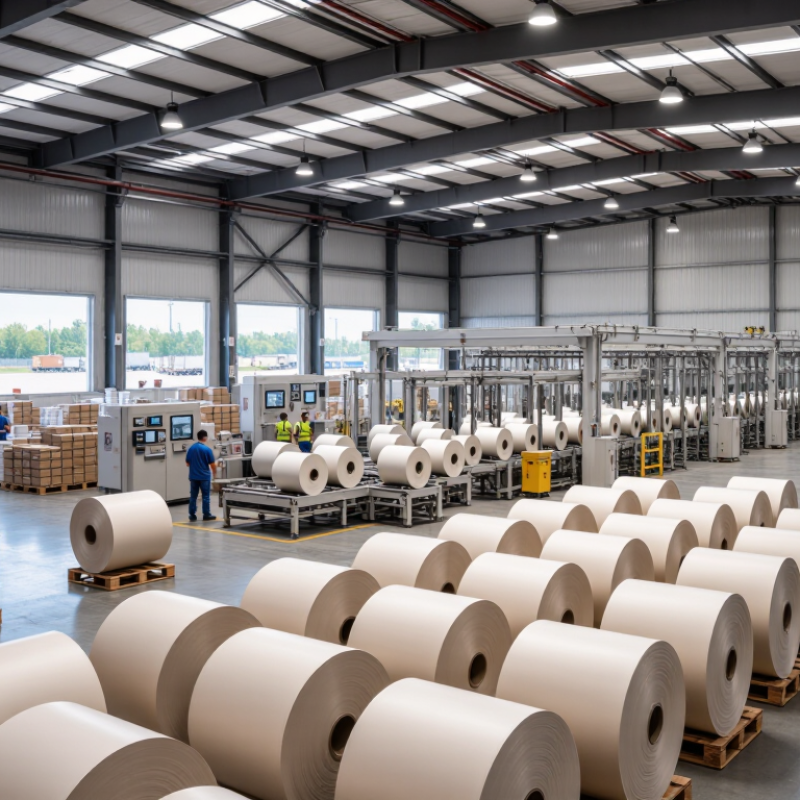
China’s leading packaging paper suppliers compete through scale, technical control, and dependable delivery. Large integrated mills manage pulping, papermaking, coating, and converting under one system. This structure can improve batch consistency and shorten production schedules. Their core strength is stable output for cartons, shopping bags, corrugated boxes, and protective wrapping.

Recycled kraft paper suppliers often stand out for fiber recovery and cost control. They may offer several basis weights, from lightweight wrapping grades to stronger shipping papers. Coated paper specialists focus on smooth surfaces, accurate color reproduction, and clean folding. Some suppliers also develop grease-resistant or moisture-resistant grades for specific packaging applications. Export-focused producers usually provide pallet planning, container loading support, and detailed shipping documents.

Ask for recent test reports, production samples, and traceable raw-material information. Check tensile strength, burst strength, moisture, caliper, and print performance. Small details matter. A supplier may quote an attractive price but lack reliable delivery records. Factory audits can reveal storage problems, weak inspection routines, or inconsistent moisture control. No supplier is perfect. Even experienced mills can face delays during maintenance or seasonal demand. This is where transparent communication becomes essential. A dependable partner explains limitations early and proposes workable alternatives. Buyers should compare technical capability, certification scope, lead time, and after-sales response, not price alone. Personally, I would approve a supplier only after reviewing samples from more than one production batch.

How to Compare Quality, Pricing, Capacity, and Certifications

What Are the Top Packaging Paper Suppliers in China?

Comparing Chinese packaging paper suppliers requires more than checking a catalog. Request samples with identical GSM, caliper, and coating specifications. Then test tensile strength, burst strength, folding endurance, and Cobb water absorption. A sheet may feel smooth but still crack during folding. That detail matters.

Pricing should include the full delivery picture. Ask for the minimum order quantity, reel dimensions, packaging method, payment terms, and shipping basis. Compare prices per usable tonne, not only per tonne quoted. A cheaper offer may hide higher trim waste or inconsistent moisture. I have seen attractive quotations become expensive after rework and delayed production. That lesson is easy to overlook.

Capacity needs practical verification. Ask for monthly output, machine width, available storage, and recent lead-time records. A supplier should explain how it handles urgent orders without weakening quality control. Review certificates such as ISO 9001, FSC chain-of-custody, and relevant food-contact documents when required. Verify certificate numbers through the issuing body. Certification alone does not prove every shipment complies. Batch test reports, retained samples, and traceable production records provide stronger evidence. Still, supplier claims deserve challenge. A video tour is useful, but an independent inspection can reveal gaps that polished documents miss.

What Are the Top Packaging Paper Suppliers in China? - How to Compare Quality, Pricing, Capacity, and Certifications

Supplier Profile Main Packaging Paper Typical Basis Weight Annual Capacity Indicative Export Price Minimum Order Typical Lead Time Quality Indicators Common Certifications Best Fit
Profile A
Large integrated mill
Kraftliner, testliner, corrugating medium 90–250 gsm 500,000–1,500,000 metric tons/year US$520–850/metric ton One full container or 20–25 metric tons 25–45 days Stable moisture, high ring crush, consistent caliper, automated laboratory testing ISO 9001; ISO 14001; FSC Chain of Custody; product-specific food-contact compliance where applicable High-volume corrugated packaging and long-term contracts
Profile B
Mid-sized recycled-paper mill
Recycled testliner, fluting medium, cartonboard 80–220 gsm 150,000–500,000 metric tons/year US$430–700/metric ton 10–20 metric tons, depending on grade 20–35 days Recycled fiber traceability, controlled ash content, acceptable compression strength ISO 9001; ISO 14001; FSC Recycled or equivalent recycled-content documentation Cost-sensitive corrugated boxes and secondary packaging
Profile C
Specialty kraft-paper producer
Sack kraft, shopping-bag paper, wrapping paper 60–120 gsm 80,000–250,000 metric tons/year US$650–1,050/metric ton 5–15 metric tons 25–40 days High tensile strength, good stretch, low dust, strong formation, controlled porosity ISO 9001; FSC Chain of Custody; ISO 14001; food-contact declaration when required Paper bags, industrial sacks, retail packaging, and premium wrapping
Profile D
Coated-board specialist
Folding boxboard, coated recycled board, packaging card 180–450 gsm 100,000–350,000 metric tons/year US$620–1,000/metric ton 10–20 metric tons 30–50 days Smoothness, brightness, printability, stiffness, coating uniformity, low curl ISO 9001; ISO 14001; FSC; recycled-content or food-contact documentation where applicable Folding cartons, consumer goods packaging, and high-quality printed packs
Profile E
Flexible converting supplier
Kraft rolls, paper sheets, waxed or coated packaging paper 35–150 gsm 20,000–100,000 metric tons/year US$700–1,400/metric ton 1–5 metric tons for standard grades; higher for custom coating 15–30 days Accurate slitting, roll-width control, coating adhesion, surface cleanliness ISO 9001; FSC or recycled-content documentation; food-contact testing where applicable Smaller buyers, customized sizes, short runs, and specialty packaging applications
Comparison note: Prices are indicative export ranges in USD per metric ton and vary by paper grade, basis weight, recycled-fiber content, coating, order volume, Incoterms, and market conditions. Capacity and lead-time figures represent realistic supplier-profile benchmarks rather than named-company disclosures. Certifications should be verified against current certificates, applicable product scope, and destination-market requirements.

Choosing the Right Chinese Supplier for Your Packaging Needs

What Are the Top Packaging Paper Suppliers in China?

Choosing the Right Chinese Supplier for Your Packaging Needs

A packaging paper supplier should fit your product, not only your target price. Start with GSM, caliper, coating, moisture resistance, and intended use. A supplier handling food-contact packaging should provide current compliance documents and traceable test reports. Ask how each batch is controlled. Request samples from different production dates, because one perfect sheet proves little. In practical purchasing work, small stiffness differences can affect folding, printing, and box stability.

Tips: Send a written specification with tolerances, artwork size, roll or sheet dimensions, and monthly volume. Compare samples under actual conditions. Test them after storage, transport, and humidity exposure. Check production capacity, quality systems, export experience, and backup plans. A video call helps, but an independent factory audit can reveal warehouse damage, unclear labels, or subcontracted production. Confirm lead time in writing, including approval, manufacturing, inspection, and shipping days.

Price deserves careful review. A low quote may exclude testing, port charges, or stronger protective packaging. Ask for a complete landed-cost breakdown and clear payment milestones. Verify certificates directly when possible. Ensure recycled-content claims match shipment documents. Responsiveness also matters. Delayed replies during sampling may become serious delays later. No supplier is perfect. I would score risks openly instead of trusting a polished presentation. Review complaint handling, corrective actions, and replacement terms before signing.