

10 Best Packaging and Paper Suppliers for Global Buyers

Global packaging decisions now shape cost, compliance, brand trust, and environmental performance. The packaging & paper market is no longer judged by price alone. Buyers also examine fiber sources, recycled content, barrier coatings, printing quality, delivery reliability, and factory transparency.

Smithers’ The Future of Global Packaging to 2028 estimates that the worldwide packaging market will approach 1.2 trillion US dollars by 2028. The report identifies sustainability, lightweighting, and improved recycling systems as major growth forces. FAO forestry statistics also show the continuing importance of paper and paperboard production across global supply chains. These figures reveal strong demand, but they do not guarantee responsible performance. Supplier claims still require verification.

Real factories matter.

Ellen MacArthur, a leading circular-economy authority, has warned, “We cannot recycle our way out of the plastic pollution crisis.” Her statement offers a useful test for every supplier on this list. Can the company reduce unnecessary material before discussing recycling? Can it provide credible certifications, production records, and consistent samples?

Our selection focuses on suppliers serving international buyers. We consider manufacturing scale, export experience, product range, quality control, certifications, customization, and communication. A carton may look excellent under showroom lights, yet fail during humid ocean transport. A paper bag may feel premium, yet carry unclear sourcing information. These details matter.

No supplier is perfect. Buyers should request recent audits, laboratory results, trial orders, and clear delivery terms. This guide presents ten established packaging and paper suppliers, while recognizing that local requirements, product risks, and market conditions can change the final choice.
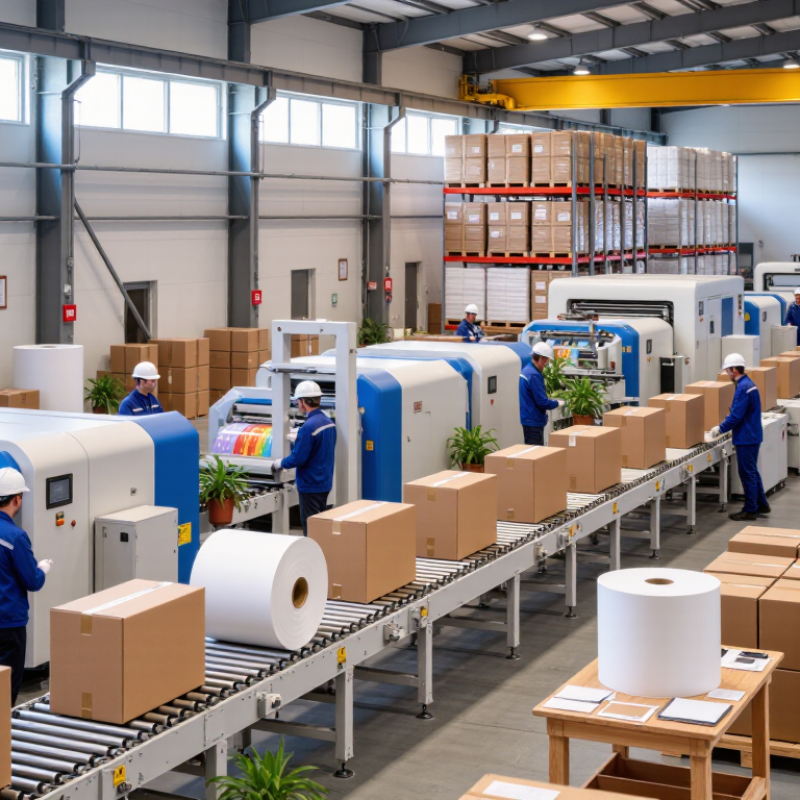
10 Best Packaging and Paper Suppliers for Global Buyers

Packaging and Paper Supplier Selection Criteria for Global Buyers

10 Best Packaging and Paper Suppliers for Global Buyers

Packaging and Paper Supplier Selection Criteria for Global Buyers

Global buyers should assess suppliers beyond unit price. Smithers projects the global packaging market will exceed US$1.2 trillion by 2028. That scale increases pressure on quality, capacity, and traceability. Request recent test reports for bursting strength, moisture resistance, grammage, and print accuracy. Ask for production samples, not only digital proofs. Small differences matter when cartons face humid ports or long warehouse storage.

Sourcing teams should also verify certifications, recycled content claims, and fiber origin. ISO 18601 provides a useful framework for packaging and environmental considerations. The OECD reports that packaging represents about 40% of global plastic waste. Paper suppliers should therefore explain their recyclability data clearly. Vague sustainability language is a warning sign. It sounds polished, but proves little.

Delivery performance deserves equal attention. UNCTAD reports that maritime transport carries over 80% of global merchandise trade by volume. A delayed shipment can stop a packing line. Compare lead times, minimum order quantities, backup mills, and port options. The World Bank’s 2023 Logistics Performance Index highlights tracking and shipment timeliness as core logistics capabilities. Buyers should request shipment histories and escalation procedures. I would also run a small pilot order first. It may feel inefficient. Yet laboratory results can miss crushed corners, uneven coating, or inconsistent color across a real production batch.


Key Product Categories Offered by Leading Suppliers

Leading packaging and paper suppliers usually cover several product categories. Paperboard cartons serve cosmetics, food, and household goods. Corrugated boxes protect heavier products during long-distance shipping. Flexible paper pouches reduce storage volume and suit dry products. Tissue, kraft paper, labels, and paper bags support retail presentation and daily operations.

The Food and Agriculture Organization reported about 417 million tonnes of paper and paperboard production in 2022. This scale shows why buyers should assess fiber sourcing, converting capacity, and delivery reliability. Smithers projects the global paper-based packaging market will surpass 500 billion dollars by 2028. However, market forecasts are not purchasing guarantees. A strong supplier should provide current specifications, test results, and sample batches. I have found that compression strength can vary between similar-looking boxes. Moisture resistance also deserves attention, especially for chilled shipments. The cheapest option may fail during one wet delivery.

Tips: Compare suppliers by category, not only by product price. Ask for recycled content percentages and food-contact documentation where relevant. Check carton dimensions against pallet layouts before approval. Request a pilot order with printed samples. Review lead times during peak seasons. The data is useful, but not perfect. Local recycling systems can change the practical value of a material. A supplier’s technical response often reveals more than its sales brochure.

10 Best Packaging and Paper Suppliers for Global Buyers - Key Product Categories Offered by Leading Suppliers

This comparison presents established supplier categories rather than named companies. Product availability, specifications, certifications, and export capabilities vary by supplier and should be confirmed during sourcing.

Supplier Category Key Product Categories Common Materials and Formats Typical Buyer Applications Key Sourcing Considerations
Integrated pulp and paper manufacturers Printing and writing paper, packaging paper, paperboard, pulp Uncoated and coated paper grades; reels and sheets; bleached or unbleached pulp Converters, printers, packaging producers, and paper distributors Confirm basis weight, brightness, sizing, reel dimensions, consistency between batches, and mill certifications.
Corrugated packaging producers Shipping cartons, regular slotted containers, die-cut boxes, protective inserts, corrugated sheets Kraft linerboard, testliner, recycled fluting, single-wall and multi-wall board E-commerce, food and beverage, electronics, household goods, and industrial shipping Specify box dimensions, board grade, compression needs, printing, palletization, and delivery lead times.
Folding carton manufacturers Retail cartons, sleeves, boxes, display packaging, paperboard inserts Folding boxboard, solid bleached board, recycled board, coated and uncoated grades Food, cosmetics, pharmaceuticals, personal care, and consumer products Review food-contact requirements where relevant, print finish, carton structure, dielines, and minimum order quantities.
Flexible packaging converters Pouches, sachets, wrappers, rollstock, laminated packaging films Paper, polyethylene, polypropylene, polyester, foil, and multilayer laminates Food, beverage, pet care, home care, and personal care products Check barrier performance, sealing compatibility, filling-line requirements, recyclability options, and regulatory compliance.
Paper bag and sack manufacturers Retail bags, takeaway bags, multiwall sacks, valve sacks, industrial paper bags Kraft paper, recycled kraft, coated paper, and paper with barrier treatments Retail, food service, agriculture, building materials, and chemicals Confirm load capacity, handle style, moisture resistance, bag dimensions, closure type, and applicable product regulations.
Tissue paper producers Facial tissue, toilet tissue, paper towels, napkins, jumbo tissue reels Virgin or recycled pulp; parent reels and converted consumer products Retailers, hospitality, healthcare, food service, and tissue converters Compare softness, absorbency, ply, sheet count, recycled content, packaging format, and private-label capabilities.
Molded fiber packaging suppliers Protective trays, bottle holders, produce trays, food containers, cushioning inserts Recycled paper pulp, recovered fiber, and molded fiber blends Electronics, food service, agriculture, cosmetics, and protective packaging Assess fit and cushioning performance, moisture resistance, tooling requirements, stacking efficiency, and end-of-life options.
Specialty paper manufacturers Grease-resistant paper, release paper, filter paper, security paper, decorative paper Engineered fiber grades, coated papers, treated papers, and specialty laminates Food processing, labels, industrial filtration, medical uses, and converting Request performance data for the intended use, including barrier, release, filtration, temperature, or strength properties.
Labelstock and pressure-sensitive materials suppliers Self-adhesive labelstock, liner materials, printable face stocks, specialty label materials Paper or film face stock, pressure-sensitive adhesives, glassine or film liners Food and beverage, logistics, healthcare, retail, and consumer goods Match adhesive and face stock to the surface, temperature, application speed, printer technology, and labeling regulations.
Paperboard and tube packaging manufacturers Composite cans, paper tubes, cores, rigid paperboard containers, edge protectors Recycled paperboard, kraft paper, spiral-wound board, and laminated paper structures Textiles, films, construction materials, food products, and consumer goods Specify diameter, wall thickness, compression strength, moisture exposure, closure style, and shipment protection needs.

Regional Strengths and International Supply Capabilities

10 Best Packaging and Paper Suppliers for Global Buyers

Regional strengths often decide whether a supplier can serve international buyers reliably. The FAO Forestry Production and Trade report recorded more than 400 million tonnes of global paper and paperboard production in 2022. East Asia remains strong in scale, coating, and automated converting. Europe offers strict quality control, recycled-content expertise, and efficient cross-border distribution. North America is competitive in industrial packaging, while Southeast Asia provides flexible production and improving export capacity.

International capability requires more than a low quotation. Buyers should examine monthly output, port access, container planning, and backup pulp sources. A supplier may provide excellent samples but struggle during peak seasons. The World Bank’s Logistics Performance Index 2023 shows clear differences in customs efficiency and shipment reliability between markets. These differences affect delivery dates, not just freight costs. I would also question suppliers that promise every specification immediately. That confidence can hide weak testing systems. My own shortlist can be wrong without factory audits and trial orders.

Tips: Request a recent certificate, production video, and loading record. Confirm moisture limits, bursting strength, paper weight, and pallet dimensions in writing. Ask for a second shipping route. For food-contact packaging, verify current compliance documents for the destination market. Small details matter: a crushed corner, unclear carton marks, or two extra days at customs can disrupt an entire launch.

Regional Paper and Paperboard Production

Approximate production by region, 2022 (million metric tonnes). Production volume offers a broad indicator of regional manufacturing scale—not a direct measure of supplier capacity or service quality.

Source: FAOSTAT Forestry Production and Trade data; regional figures are rounded estimates compiled from country-level paper and paperboard production.

Quality Standards, Sustainability, and Regulatory Compliance

Choosing among the 10 best packaging and paper suppliers for global buyers requires more than comparing prices. Quality should be visible in batch records, test reports, and sample consistency. A reliable supplier can explain its basis weight, moisture range, tensile strength, and print performance. Ask for recent certificates, not scanned documents from years ago. Small details matter.

Sustainability needs practical evidence. Look for responsibly sourced fiber, recycled content records, controlled water use, and clear waste data. Certifications such as FSC, PEFC, ISO 14001, or equivalent schemes can support evaluation, but they do not replace an audit. Proof matters. A supplier should also explain how coatings, inks, adhesives, and barriers affect recycling. Some “eco” claims remain vague, and buyers should challenge them politely.

Regulatory compliance must match the destination market and product use. Food-contact packaging may require migration testing, declarations of compliance, and restricted-substance controls. Other shipments may involve packaging waste rules, labeling duties, or chemical requirements such as REACH. Request test results tied to the exact material and production site. I have seen purchasing teams accept a strong sample, then discover weaker paper in mass production. That gap deserves attention. Independent inspections, sealed reference samples, and documented corrective actions can reduce the risk. Still, no checklist catches every problem. Supplier performance should be reviewed after delivery, especially when humidity, transport time, and storage conditions change.

How to Compare Suppliers and Choose the Right Partner

Global buyers often compare paper suppliers by price, then regret ignoring the fine print. A reliable review needs more than a polished catalog. Request recent samples, technical sheets, and test reports before discussing volume. Check GSM, caliper, moisture tolerance, printability, recycled content, and fiber origin. Ask how each value was measured. Small details matter.

A box that looks strong in a showroom may soften after a humid sea voyage. Ship samples through a similar route, if possible, and inspect them after storage. This practical test can expose weak coatings, warped board, and inconsistent folding. Still, one successful shipment proves little. Production changes happen. Compare ten shortlisted suppliers with the same scorecard. Include capacity, lead time, minimum order quantity, tooling fees, certifications, audit access, and contingency plans. Calculate delivered cost, not only the factory quotation. Freight, duties, damaged units, and storage can change the result.

Do not rely solely on certificates. Verify their scope, validity, and issuing organization. Ask for a production schedule showing raw-material purchasing, printing, finishing, and final inspection. A supplier that answers clearly is easier to manage when delays occur. Communication speed matters too. Test it with a detailed question, not a casual inquiry. Request a corrective-action example from a previous quality issue. The response may reveal more than a sales presentation. I would also leave room for doubt: a perfect sample may hide ordinary factory pressure during peak season. Confirm capacity during your actual buying window.