

Choosing the best supermarket paper in 2026 requires more than comparing prices or surface appearance. Global buyers must examine strength, food-contact safety, print quality, moisture resistance, and verified fiber sources. A paper bag may look sturdy on a warehouse pallet, yet soften quickly beside a refrigerated display. Practical testing matters.
This guide evaluates supermarket paper for shopping bags, wrapping sheets, produce packaging, shelf labels, and promotional materials. It considers basis weight, burst strength, grease resistance, recyclability, and supplier consistency. Buyers should request recent laboratory reports, product specifications, and traceable certification documents, such as FSC or PEFC records where relevant. Local food-packaging rules still apply. Global sourcing never removes that responsibility.
No single paper grade suits every supermarket. A lightweight sheet may reduce transport emissions, but it can fail under heavy groceries. A coated paper may resist leaks, yet complicate recycling in some markets. That trade-off deserves attention. Supplier audits, pilot orders, and simulated checkout tests can expose weaknesses before large-scale purchasing. However, testing conditions rarely match every store, climate, or customer habit. This article therefore treats recommendations as informed guidance, not permanent guarantees. Prices, regulations, fiber availability, and mill performance can change during 2026. Reliable decisions need current evidence, transparent communication, and a willingness to revise earlier assumptions.
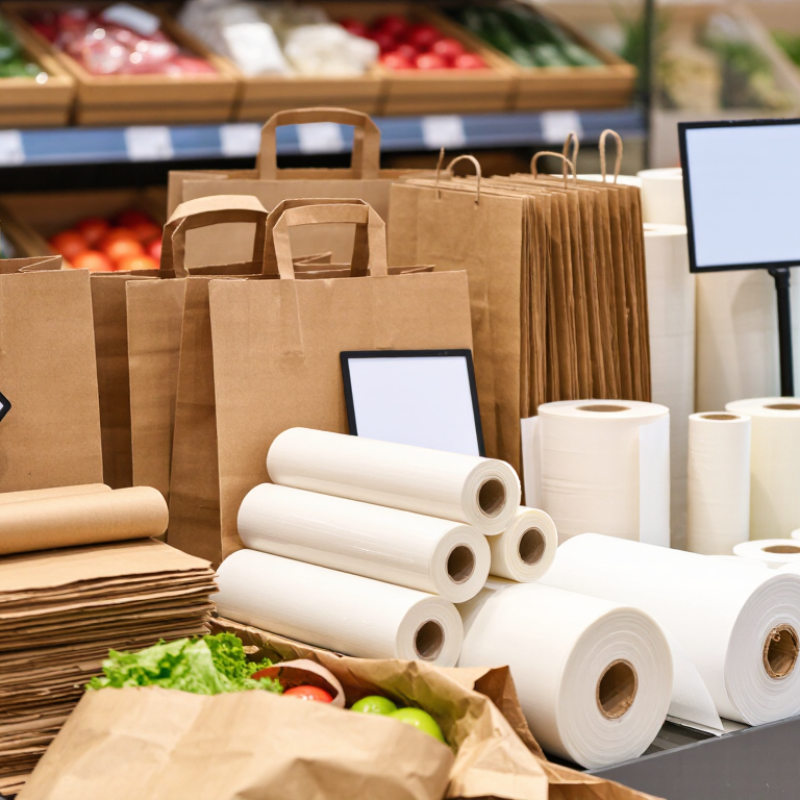
Supermarket paper is more than a receipt roll. It includes shelf labels, food wrapping, paper bags, tissue, carton inserts, and packing sheets. Each item serves a different purpose. Receipt paper needs clear printing and stable storage. Food-contact paper needs suitable barriers against grease and moisture. Shelf labels must remain readable under bright lights and daily handling.
In 2026, paper selection affects cost, waste, worker efficiency, and customer trust. Global buyers should check fiber sources, recycled content, coating details, roll dimensions, and packaging protection. They should also request test reports for strength, print quality, moisture resistance, and food-contact suitability when relevant. Local rules may differ, so one certificate rarely answers every market need. This point is easy to overlook.
Tips: Ask for a complete technical sheet before ordering. Compare paper weight, roll length, core size, and usable yield. Test samples beside current store equipment. A cheaper roll may finish sooner or cause jams. Small differences become expensive across hundreds of stores.
Reliable sourcing also requires supplier transparency. Buyers should review production consistency, batch identification, and complaint procedures. A visible sample can look excellent, yet perform poorly in cold rooms or humid warehouses. That is why practical trials matter. Paper is a quiet operating material, but weak specifications can create daily disruption.

2026 Best Supermarket Paper for Global Buyers?
Key Types of Supermarket Paper for Different Retail Applications
Supermarket paper must match the product, shelf life, and handling conditions. A lightweight kraft bag suits bread, produce, and dry groceries. Heavier sack paper supports rice, flour, and pet food. For chilled meat or seafood, grease-resistant paper helps control leakage. Moisture changes everything.
Paperboard is more suitable for cereal cartons, frozen-food sleeves, and promotional displays. Coated grades improve print quality, but coatings can complicate recycling. The 2024 Smithers report, The Future of Paper Packaging to 2029, identifies food packaging as a major demand area for paper-based materials. Buyers should therefore compare barrier performance, not only price.
According to FAOSTAT, global paper and paperboard production reached roughly 417 million tonnes in 2022. This scale shows paper remains a critical industrial material, but volume alone does not prove sustainability. A thinner sheet may reduce material use, yet fail during transport. A stronger grade may prevent waste, but increase fiber consumption. That trade-off deserves scrutiny.
For shopping bags, flat bags offer speed at checkout, while gusseted bags provide greater carrying capacity. For bakery counters, grease-resistant wrapping protects texture and reduces staining. Retailers should test folding strength, moisture resistance, print adhesion, and recyclability in local systems. Specifications often look perfect on paper. Store conditions can disagree.
| Paper Type | Typical Basis Weight / Format | Main Supermarket Application | Key Performance Requirements | Food-Contact Considerations | Recycling / Disposal Profile | Global Buyer Selection Note |
|---|---|---|---|---|---|---|
| Kraft Shopping Bag Paper | 60–120 g/m² Flat sheets or converted bags |
Checkout bags, grocery carry bags, takeaway food bags and produce bags | High tear resistance, good tensile strength, foldability, handle strength and reliable printing performance | For direct or indirect food contact, use paper and inks suitable for the intended food-contact conditions | Usually recyclable Remove plastic films, metalized layers and heavy contamination where required by the local system |
Choose the basis weight according to load, bag dimensions, handle design, humidity and expected carrying distance |
| Greaseproof Paper | 30–60 g/m² Sheets, wraps or interfolded formats |
Bakery products, sandwiches, pastries, ready-to-eat foods and deli wrapping | Resistance to oil and grease, adequate wet strength, clean release and controlled porosity | Must be specified for the relevant food type, temperature range and contact duration; barrier performance varies by construction | Conditionally recyclable Food residue and special coatings may limit acceptance in local paper-recycling programs |
Confirm grease resistance using the supplier’s test method and check whether fluorinated or plastic barrier treatments are used |
| Butcher / Wrapping Paper | 35–80 g/m² Sheets or rolls |
Meat, poultry, seafood, cheese, produce and general counter-service wrapping | High wet strength, puncture resistance, flexibility and resistance to juices or moderate surface moisture | Direct-contact suitability, absorbency and barrier properties should match the product and refrigerated or heated conditions | Depends on coating Uncoated grades are generally easier to recycle than laminated or heavily coated grades |
Use a higher-strength grade for sharp-edged or wet products and verify compatibility with refrigeration and display time |
| Baking / Parchment Paper | 35–60 g/m² Sheets or rolls |
In-store bakery trays, ovenable food packs, cake bases and prepared-food presentation | Release performance, heat resistance, dimensional stability and resistance to moderate grease | Specify the maximum operating temperature and whether the paper is intended for baking, reheating or cold presentation | Check local rules Food contamination and silicone or other coatings can affect recyclability |
Do not select solely by grammage; confirm release behavior, heat limits and coating chemistry for the equipment used |
| Thermal Receipt Paper | Typically 48–80 g/m² Common roll widths: 57 mm or 80 mm |
Checkout receipts, self-checkout stations, weighing scales and queue or service tickets | Reliable image development, smooth surface, roll uniformity, low dust and resistance to light, heat and plasticizers | Thermal coatings require regulatory and market-specific review; request declarations for restricted substances and avoid assuming all grades are equivalent | Often excluded from paper recycling Thermal coatings may contaminate recycled fiber streams; follow local collection guidance |
Check printer compatibility, core size, roll length, image durability and chemical compliance documentation |
| Shelf and Drawer Liner Paper | 80–180 g/m² Sheets, pads or rolls |
Produce displays, bakery counters, storage drawers, shelf protection and promotional merchandising | Flatness, stiffness, printability, moisture tolerance and resistance to scuffing during handling | Food-contact approval is needed when the paper directly touches unpackaged food; indirect display use may have different requirements | Usually recyclable if uncoated Waxed, laminated or heavily contaminated versions may require alternative disposal |
For refrigerated or humid areas, request moisture-resistance data and test curl or dimensional change before large-scale purchase |
| Paperboard Food Carton Stock | 180–600 g/m² Folding cartons and sleeves |
Cereal, dry goods, bakery packs, frozen food cartons, multipacks and promotional sleeves | Stiffness, crease quality, printability, converting performance and resistance to compression during stacking | Use a suitable functional barrier when the product contains moisture, grease or aroma-sensitive ingredients; recycled fiber may require an appropriate barrier for direct contact | Generally recyclable if fiber-based Plastic laminates, foil layers and food residue can reduce recyclability |
Specify caliper, stiffness, moisture barrier, folding endurance and packing-line performance rather than grammage alone |
| Corrugated Packaging Board | Common flute profiles: approximately 1.5–7 mm overall thickness Single-wall or double-wall construction |
Distribution cases, produce boxes, e-commerce grocery orders and shelf-ready transport packaging | Edge crush strength, stacking strength, puncture resistance, print quality and performance under humidity | For direct food contact, use an appropriate liner and documented compliance; many transport cases are intended for packaged products | Widely recyclable Keep dry and remove excessive plastic, wax and food contamination where required |
Select flute profile and board grade according to box size, product weight, stacking height, transport distance and climate |
| Paper Produce Bag / Deli Bag | 35–80 g/m² Flat bags or gusseted bags |
Fruit and vegetables, bulk foods, bakery items and deli counter portions | Low dust, adequate tear strength, ventilation options, grease tolerance and easy opening at the counter | Direct food-contact suitability depends on the paper, ink, adhesive and any barrier treatment used | Usually recyclable Wet or heavily food-soiled bags may not be accepted in standard recycling streams |
Balance bag strength with breathability; produce may require perforation or ventilation to reduce condensation |
2026 Best Supermarket Paper for Global Buyers?
Choosing supermarket paper requires more than comparing price per carton. Buyers should check basis weight, ply structure, softness, absorbency, wet strength, and lint release. A sheet may feel soft in a showroom but fail beside a busy kitchen sink. Test samples under dry and wet conditions. Keep the results.
Reliable sourcing depends on evidence. Request recent laboratory reports, production specifications, batch numbers, and raw-material traceability. For napkins and food-contact towels, confirm that documentation matches the destination market. Check recycled content claims carefully. Certification alone does not replace product testing or factory evaluation. During an audit, inspect storage areas, moisture control, packaging seals, and carton compression. Damp cartons reveal weak logistics planning.
Small details affect supermarket performance. Rolls should unwind evenly, perforations should separate without tearing, and inner cores must fit common dispensers. Packaging should show readable quantity, dimensions, material information, and disposal guidance. A barcode that fails at checkout creates avoidable costs. So does inconsistent sheet size.
There is no universal “best” paper. Climate, shopper expectations, shelf space, and transport distance change the decision. A low-cost grade may work in a dry region but disappoint in humid warehouses. Buyers should compare landed cost, not factory price alone. Some evaluations remain imperfect because real household use is difficult to reproduce. Review complaints, repeat tests, and leave room to revise the specification.
Choosing supermarket paper requires more than checking the lowest quotation. In supplier audits, I compare sheet size, paper weight, roll length, packaging, minimum order quantity, and delivery terms. A low unit price can hide expensive freight, weak cartons, or frequent shortages. Ask suppliers for recent samples. Check softness, absorption, embossing, tear resistance, and batch consistency under normal store conditions.
Price comparison works best with a landed-cost sheet. Include production, inland transport, ocean freight, insurance, duties, and warehouse handling. Request at least three comparable offers. Keep specifications identical. One supplier may quote a thinner product, making the offer look better. That happened in an early comparison I reviewed. The spreadsheet was accurate, but the product specifications were not equal.
Sustainability claims need evidence, not attractive wording. Request fiber-origin records, recycled-content proof, wastewater data, energy information, and current certificates from recognized independent bodies. Check certificate scope and expiration dates. Also examine packaging reduction and pallet efficiency. A supplier with strong credentials may still have inconsistent delivery performance. Review factory audit findings, production capacity, complaint response times, and reference orders from similar markets. Speak with the production team, not only the sales contact. Small details matter. A missing batch code or damp carton can reveal weak controls. Sustainability is important, but reliability must remain measurable.
For 2026 sourcing, supermarket paper requires more than a low unit price. Product specifications should state basis weight, moisture limits, tensile strength, roll diameter, and food-contact suitability. Eurostat reported 186.5 kilograms of packaging waste per EU resident in 2022. This raises buyer pressure for recyclable, fiber-based formats. However, recycled content can affect whiteness, odor, and machine performance. Procurement teams should test samples under real humidity conditions, not only in a laboratory.
Import compliance needs a destination-by-destination checklist. Food-contact paper may require declarations, migration testing, and evidence of controlled inks or adhesives. Requirements can differ between the EU, North America, and Asian markets. Customs teams should verify HS classification, origin documents, carton markings, and batch traceability before shipment. UNCTAD’s Review of Maritime Transport 2024 states that over 80% of global merchandise trade by volume moves by sea. Moisture-proof pallet wrapping and container desiccants therefore deserve attention. They are not glamorous. They prevent expensive claims.
Tips: Request a recent certificate of analysis, fiber-origin evidence, and independent test reports. Compare landed cost, not factory price. Include tolerances for GSM, roll width, and core diameter in the purchase contract. A small specification gap can stop an automated packing line. Also review supplier capacity during peak seasons. Forecasts are useful, but they are never perfect. Leave room for corrective action, because even compliant paper may perform poorly on a specific machine.
Import, compliance, and procurement factors are ranked by their typical importance when evaluating supermarket paper products for international sourcing.
Compliance and food-contact safety should be confirmed before price negotiations. Buyers should also compare recycled-fiber documentation, product consistency, landed cost, minimum order quantity, and delivery reliability across qualified suppliers.