Paper Bags 10 Buying Tips for Global Buyers
Paper bags are no longer a simple checkout accessory. They are purchasing decisions involving strength, sustainability, printing, transport, and total cost. The global paper bag market is expanding as retailers replace some plastic formats and consumers demand clearer environmental information. Smithers’ Future of Paper Bags to 2028 identifies continued growth in foodservice, grocery, and e-commerce applications. Its analysis also highlights pressure on suppliers to improve barrier performance and production efficiency.
The details matter. A weak handle can fail beside a wet supermarket entrance. An oversized bag wastes material and shipping space. Unverified “eco-friendly” claims can damage buyer confidence. Ellen MacArthur, a leading circular-economy and packaging authority, describes the goal clearly: “A circular economy is based on the principles of designing out waste and pollution, keeping products and materials in use, and regenerating natural systems.” That principle should guide every bags paper purchase, from fiber sourcing to end-of-life planning.
This guide presents ten practical buying tips for global buyers. It considers GSM, paper grade, handle construction, moisture resistance, printing quality, certifications, factory capability, minimum order quantities, shipping conditions, and landed cost. The Sustainable Packaging Coalition and the Forest Stewardship Council both emphasize responsible sourcing and credible certification. Yet certification alone is not enough. A certified bag may still be poorly designed or inefficiently shipped.
No checklist is perfect. Regional recycling systems differ. Customer behavior changes. Buyers should test samples under real conditions, record failures, and revise specifications. Careful purchasing is not merely about finding the lowest quote. It is about choosing a dependable bag that performs visibly, consistently, and responsibly.
Understand Paper Bag Types, Materials, and Common Applications
Paper Bags: 10 Buying Tips for Global Buyers
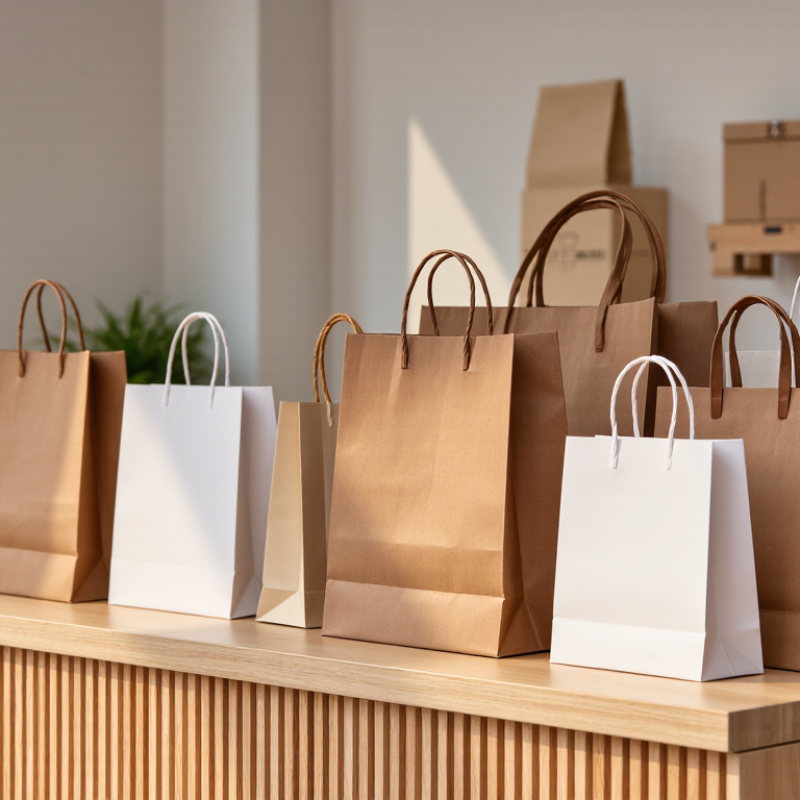
Paper bags differ in structure, material, and intended use. Kraft paper suits grocery shops, bakeries, and takeaway counters because it offers strength and a natural appearance. White paper provides a cleaner surface for detailed printing. Coated paper resists light moisture, but it may reduce recyclability. Recycled paper supports sustainability goals, although its texture and color can vary between batches. Choose twisted handles for comfort, flat handles for simple retail packaging, and handleless sacks for basic food service. Small details matter.
Tips: Define the application before choosing the bag. A bakery bag may need a grease-resistant inner layer, while a clothing bag may need stronger handles and a wider base. Check paper weight, commonly measured in GSM, but do not judge strength by GSM alone. Ask for sample testing with your actual products. A bag that holds empty boxes may fail with glass jars.
Global buyers should confirm dimensions, handle attachment, printing quality, and moisture performance. Request material specifications and production samples before placing a large order. Food-related uses require suitable documentation and controlled manufacturing conditions. I once underestimated how much a folded base affects stability. It looked fine on a sample table, then leaned under real products. That mistake was useful. Packaging should be tested in storage, transport, and daily handling, not only inspected visually. Small trials can reveal weak seams, ink rubbing, or uncomfortable handles before they become costly problems.
Define Product Specifications, Dimensions, Handles, and Load Requirements
Paper Bags: 10 Buying Tips for Global Buyers
Define the product before discussing price. State the paper type, color, surface finish, printing method, and recycled content clearly. Kraft paper may look similar, but its strength varies with fiber quality and paper weight. Request a material sample, not only a digital image. Keep samples.
Dimensions need precise language. List width, height, and gusset depth in millimeters. Confirm whether measurements are internal or external. A small difference can affect product fit and shipping cartons. Measure twice. Also specify acceptable tolerances, since handmade or folded bags rarely match perfectly.
Handle design deserves practical testing. Choose twisted paper, flat paper, cotton, or another suitable option based on comfort and weight. Confirm handle length, attachment method, and reinforcement patches. For heavier contents, ask for a bottom insert and stronger bonding. Do not trust appearance alone. Test it.
Define the expected load in kilograms and describe the contents. A bag carrying clothing needs different support from one holding glass containers. Ask the supplier to perform static and drop tests using a production-level sample. Record the test time, load, and failure point. Moisture exposure also matters during international transport, especially in humid routes.
Packing specifications should include bundle quantity, carton size, gross weight, and pallet limits. These details influence freight costs and warehouse handling. One imperfect assumption can affect thousands of bags. Review the sample after real handling, because a clean factory test may not reflect crowded storage, rough loading, or hurried retail use.
Evaluate Printing, Branding, Sustainability, and Compliance Options
Global buyers evaluating paper bags should begin with the use case, not a supplier’s attractive sample.
Check paper weight, handle strength, gusset depth, and moisture exposure. A bag for bakery boxes needs different performance from one carrying books. Ask for production samples, not only digital images. I have seen colors shift between a screen proof and final ink. Small detail. Request a physical color proof and confirm the accepted tolerance in writing. Printing method affects price, texture, and recycling considerations. Water-based inks may support a cleaner material profile, but verify drying quality and rub resistance before approval.
Branding must remain readable at the point of sale. Compare logo size, panel placement, contrast, and ink coverage under indoor and outdoor light. Fine lines can disappear on kraft paper. Embossing and special finishes may look premium, yet they can complicate recycling or raise minimum order quantities. Confirm whether handles, labels, and coatings use compatible materials. Ask for artwork checks, preproduction approval, and batch photographs.
This is practical evidence, not decoration.
One weakness remains: buyers often approve a beautiful sample without testing a filled bag. Load the intended weight and carry it repeatedly.
Sustainability claims require documents. Request recycled-content percentages, fiber-origin information, relevant chain-of-custody evidence, and test reports. Do not accept vague words such as “eco-friendly” without measurable details. Check packaging, labeling, food-contact status when applicable, and import requirements in each destination market. Requirements differ. Have an independent inspection review dimensions, print registration, odor, handle attachment, and carton counts. A supplier may pass a visual check while missing a tolerance that affects packing lines.
Leave room for honest review. A cheaper bag can create more waste if it fails early.
Compare Suppliers, Pricing, Minimum Orders, and Production Capabilities
Paper Bags: 10 Buying Tips for Global Buyers
Compare Suppliers, Pricing, Minimum Orders, and Production Capabilities
Global paper bag buying needs more than a low quotation. In sourcing projects, I compare at least three suppliers using identical specifications. Ask for paper grade, GSM, dimensions, handle type, printing colors, and packing method. A quotation without these details can mislead. Request samples before approving a production order. Check the bag’s base, folded edges, handle attachment, and print alignment. Small weaknesses become expensive failures during filling and transport. Supplier history also matters. Review factory photos, audit records, export experience, and response speed. Do not trust polished brochures alone.
Tip: Compare landed pricing, not unit price. Add tooling, sampling, freight, duties, and possible inspection fees. Ask whether prices change at different quantities. Confirm the minimum order quantity. A low MOQ may carry a higher unit cost. A large MOQ can create unused inventory. That happened in one project. Demand was estimated too generously. We should have tested a smaller batch. Also ask about lead times for samples, approval, production, and shipment. Written dates are more useful than promises made during calls.
Tip: Examine production capability. Confirm monthly capacity, printing equipment, handle-making methods, and quality-control checkpoints. Ask how defects are recorded and replaced. Request a pre-production sample matching the final materials. For international orders, clarify carton dimensions, pallet use, and moisture protection. Paper absorbs humidity quickly. A supplier may meet the sample standard but struggle during peak season. Check backup material sources and machine maintenance plans. These questions can feel excessive. They are not. Still, no checklist catches everything; recheck assumptions before payment.
Paper Bags: 10 Buying Tips for Global Buyers
Use these indicative procurement benchmarks to compare supplier capability, pricing pressure, minimum order quantities, and production readiness. Actual terms vary by bag size, paper grade, printing method, finishing, destination, and certification requirements.
How to use this chart: Lower unit prices generally require larger minimum orders, longer production planning, and more standardized specifications. Confirm quotations, lead times, material certifications, sample approval, packaging, and shipping terms directly with each supplier.
Verify Samples, Quality Standards, Shipping Terms, and Delivery Schedules
A paper bag sample is not proof of production quality. Check three samples from different batches. Measure handle strength, gusset width, paper grammage, moisture resistance, and finished dimensions. Photograph every measurement. Record tolerances in a signed specification sheet. This feels slow. It prevents costly surprises. Smithers’ Future of Paper-Based Packaging to 2028 valued the global paper-based packaging market at about US$368.6 billion in 2023 and forecasts continued growth through 2028. Larger markets demand tighter consistency. Ask for laboratory reports using relevant ISO or EN methods. Verify the laboratory’s accreditation and test scope. A certificate without traceable conditions is weak evidence.
Request both a pre-production sample and a sealed production sample. Compare print color, odor, seam bonding, handle attachment, and stacking performance. ISO 2859-1 can support a clear sampling plan, while transport testing should reflect the actual load and route. ASTM D4169 or ISTA methods may help. However, no test replaces practical judgment. Paper absorbs humidity. Define storage conditions and acceptable compression loss. A visually perfect bag may fail after two wet port days.
Write Incoterms 2020, the named place, insurance duties, document responsibilities, and risk transfer into the contract. Confirm when lead time begins: deposit, artwork approval, or sample sign-off. Separate production days, inspection time, port cut-off, sailing, customs clearance, and a contingency buffer. UNCTAD’s Review of Maritime Transport 2024 states that shipping carries over 80% of global merchandise trade by volume. Ask for booking evidence and a recovery plan. Delivery promises need dates, not optimism.