
Choosing custom printing paper can turn an ordinary business message into a physical brand experience. The right sheet affects color, texture, durability, readability, and customer memory. A café menu may need grease resistance, while a luxury invitation may require soft cotton fibers and a heavier 300 gsm finish. Custom printing paper is not simply a decorative upgrade. It is a practical decision linked to packaging, marketing, and product quality.
Printing industry expert Frank Romano has said, “The printing industry is not dying; it is changing.” His observation also applies to paper selection. Businesses now compare recycled content, responsible sourcing, digital compatibility, and tactile appeal. A carefully chosen paper can support a sustainability story without making unsupported environmental claims. It can also reduce reprints when the surface matches the ink and printing method.
The details matter.
A matte coating may improve readability under bright retail lighting. A smooth, coated sheet can produce sharper product photography. Uncoated paper may offer a warmer, more natural touch. However, no stock solves every problem. Thick paper can increase postage costs. Dark colors may appear less consistent on textured fibers. Recycled sheets can show small variations between batches.
That imperfection deserves attention. A sample proof may look excellent, yet the final run can reveal differences in drying time or color density. Experienced suppliers test paper, ink, folding, and finishing together. They also confirm paper specifications before production. For businesses, this process creates a more reliable result. Custom printing paper works best when creativity is balanced with testing, budget control, and honest performance expectations.
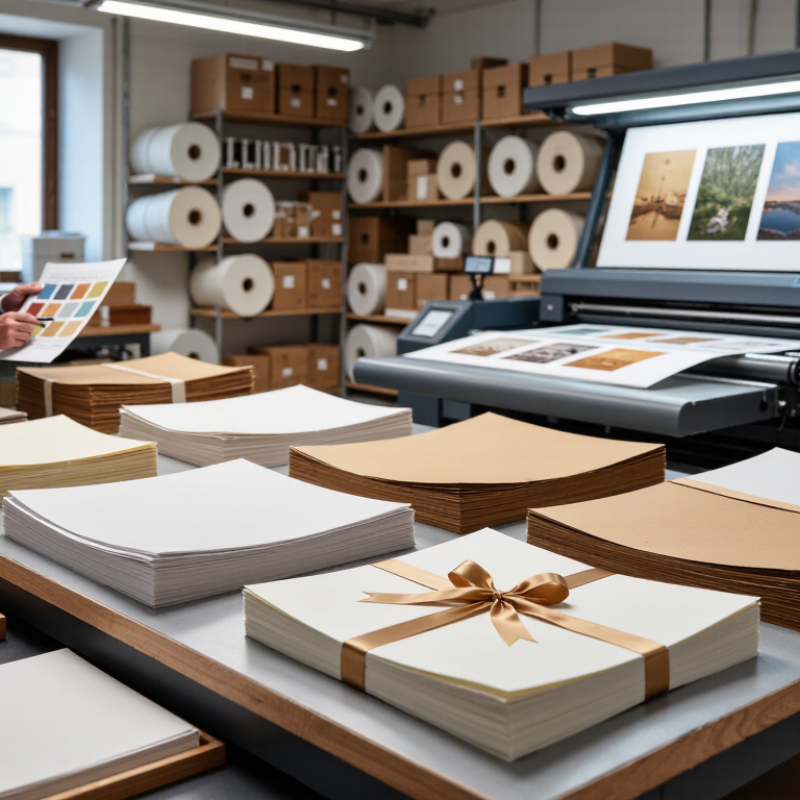
Custom printing paper is more than a decorated sheet. It is a physical part of how modern businesses communicate. Paper texture, weight, color, and finish can influence how customers judge a proposal, package, menu, or thank-you card.
In my experience, a heavier sheet makes a presentation feel more deliberate. A subtle texture can also make a small printed detail memorable, such as a raised logo or a handwritten note area.
However, attractive paper is not always practical. A glossy finish may look impressive but show fingerprints easily. A rough surface may absorb ink and soften fine text. One sample looked excellent on screen, yet the final proof appeared darker than expected. That was a useful reminder: appearance needs testing.
Tips: Request a physical proof before ordering in quantity. Check paper weight, ink absorption, folding performance, and color accuracy. Ask whether recycled-content claims can be verified. Also test the paper in your actual printer, especially for invoices or short-run office materials. A simple checklist prevents expensive reprints.
Custom paper can support consistency across customer touchpoints. Matching a package insert with a sales folder creates a more organized experience. The best choice depends on use, not fashion. A restaurant may need grease-resistant stock, while a consultant may prefer a calm, uncoated finish. Good decisions come from balancing appearance, handling, budget, and honest performance.

Why Choose Custom Printing Paper for Your Business?
How Custom Paper Supports Branding and Customer Recognition
Custom printing paper turns ordinary customer moments into recognizable brand experiences. A textured invoice, soft-touch card, or carefully colored package insert can feel more deliberate than standard stock. Customers often notice these details before reading every word. That physical response can support memory and trust.
In my experience, consistency matters more than decoration. Use the same core colors, logo placement, and paper texture across invoices, brochures, menus, and thank-you cards. Choose paper weight according to its purpose. A sturdy card feels reliable, while lightweight sheets suit frequent documents. Ask for a physical proof. Digital previews can hide differences in brightness, grain, and ink absorption.
Small details matter.
The first proof may appear too dark or slightly dull. That is not unusual. Paper fibers and coatings change how colors look under office lighting, sunlight, and retail fixtures. A printer with documented color controls can reduce these variations. Still, no process is perfect. Review samples with actual staff and customers before ordering in bulk. A design that looks elegant on a screen may feel crowded in hand. Leave space for writing, folding, and repeated handling. Recognition grows through repeated, useful encounters, not one impressive sheet.
How custom paper supports branding and customer recognition
Physical marketing delivers a higher median response rate than several common digital channels. Custom-printed paper can strengthen this advantage by making colors, typography, logos, and messaging consistent across packaging, inserts, stationery, and direct mail.
Data: 2023 median marketing response rates reported in industry response-rate research. Percentages represent response rate, not brand recognition.
Why Choose Custom Printing Paper for Your Business?
The right paper can make business materials feel deliberate, useful, and trustworthy. Paper selection should match the material’s purpose, handling, and visual message.
For business cards, thick uncoated or lightly coated stock gives a firm, professional feel. Uncoated paper also supports handwritten notes without smudging. Brochures often benefit from coated paper because images look sharper and colors appear more vivid. A matte finish reduces glare in offices and showrooms. Gloss can create stronger visual impact, but fingerprints become more noticeable.
Packaging needs paper with enough strength to protect its contents. Kraft-style stock can suggest simplicity, while textured paper adds a tactile detail to premium products. Menus and service sheets may require water-resistant or laminated paper, especially in busy environments. For invoices, forms, and internal documents, smooth lightweight paper usually improves writing and reduces mailing costs.
Paper weight matters.
A heavier sheet is not always better. It may feel impressive, yet increase production and shipping expenses. I once favored thicker stock for every customer-facing item, but practical testing showed that balance worked better. Samples should be folded, stacked, written on, and viewed under real lighting. Recycled paper can support responsible business goals, although its natural texture may slightly change printed colors. That trade-off deserves honest review before approval.
Choosing custom printing paper requires more than matching a color sample. Start with the product’s purpose. Packaging inserts, catalogs, menus, and premium invitations need different thickness, opacity, and folding performance. A practical press check should test ink absorption, drying time, edge cracking, and readability under warm lighting. Paper that feels impressive may still perform poorly.
Environmental data also deserves careful review. The American Forest & Paper Association reported a 60.8% paper recovery rate in the United States in 2023, with approximately 46 million tons recovered. That figure supports recycled content, but recycled fibers can affect surface smoothness and color consistency. Ask for verified fiber information and review the paper’s recovery or certification documentation. Claims without evidence are weak. Very weak.
Printing method changes the decision. Offset printing often benefits from stable, coated surfaces, while digital presses may require papers tested for toner adhesion or inkjet absorption. ISO 12647 guidance can help control color reproduction, but it cannot replace a physical proof. Check the actual paper under production conditions. Moisture, storage temperature, and stacking pressure can alter results.
Cost needs a wider calculation. A cheaper sheet may increase ink use, spoil during folding, or create delivery delays. Compare total production cost, not only the price per ream. Custom texture can strengthen brand perception, yet excessive finishes may reduce recyclability and complicate processing. I would not treat premium appearance as automatic value. The final choice should balance touch, performance, evidence, and realistic production limits.
Custom printing paper can make packaging, menus, cards, and inserts feel more intentional. The right paper also protects printed details during handling. Begin with a clear order brief. Record the sheet size, thickness, finish, color target, print method, quantity, and delivery date. Ask the supplier for technical specifications and a physical sample. Digital images can misrepresent texture and color. A sample is more trustworthy.
Tips: Order a small test batch before committing. Print your actual artwork, not a generic file. Check fine text, dark areas, folding lines, and edge quality under normal lighting. Rub the surface with dry hands. Then test it after stacking, bending, and brief contact with moisture. These simple checks often reveal problems early.
Evaluate the paper from a customer’s perspective. Does it feel suitable for the product price? Does the surface support readable text? Does the sheet fold cleanly without cracking? Measure color consistency across several sheets. Also compare waste, packaging, and shipping damage, not only the unit price. My first sample once looked elegant but jammed during production because it was too thick. That mistake changed the evaluation process. I now test machine compatibility before approving the final order. A beautiful sample is not enough.