Why Choose Custom Printed Packaging Paper for Your Brand?
Why Choose Custom Printed Packaging Paper for Your Brand?
Packaging is no longer a silent container. It is the first physical message many customers receive from a brand. A printed paper sleeve, mailer, or wrapping sheet can show color, texture, and purpose before the product is opened. Two Sides’ 2023 European Consumer Packaging Perceptions Study found that 82% of consumers considered paper and cardboard packaging more sustainable. That perception matters at the shelf and during unboxing. Still, appearance alone cannot prove responsible packaging.
Custom printed packaging paper can support stronger recognition while using practical brand details. A consistent logo placement, readable recycling guidance, and tactile uncoated paper create a clearer customer experience. PwC’s 2024 Voice of the Consumer Survey reported that consumers were willing to pay an average premium of 9.7% for sustainably produced or sourced goods. However, that willingness is not a blank cheque. Customers may question vague environmental claims, excessive ink coverage, or oversized packaging. The design must earn trust.
Material selection needs professional review. Fiber source, coating, ink chemistry, food-contact requirements, durability, and local recycling systems all influence the final result. McKinsey’s research on sustainable packaging also shows that recyclability and material choices strongly affect consumer preferences. Yet reports do not replace testing. A beautiful paper wrap may tear in humid delivery conditions. That is a real weakness.
This guide examines how custom printed packaging paper can improve brand visibility, perceived value, and operational consistency. It also considers cost, performance, print quality, and honest sustainability communication. The best packaging is not merely attractive. It works in a warehouse, on a doorstep, and in a customer’s hands.
What Is Custom Printed Packaging Paper?
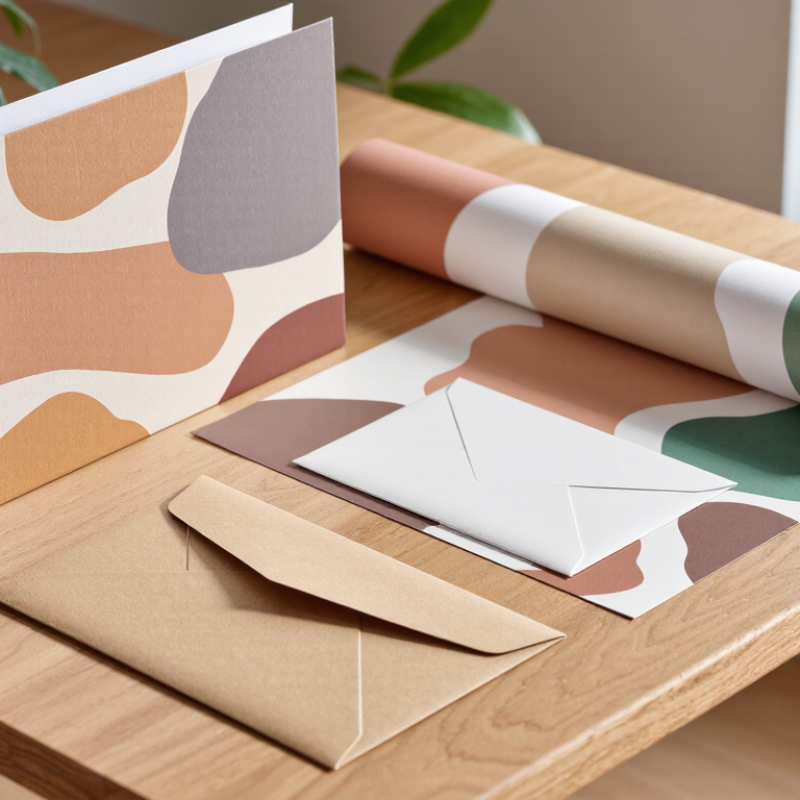
Custom printed packaging paper is paper designed with your artwork, colors, text, or patterns for product wrapping and presentation. It can include tissue paper, kraft paper, wrapping sheets, sleeves, and other paper-based formats. Unlike plain packaging, it communicates useful details before the package is opened.
From practical packaging work, I have found that good printing must support both appearance and function. Paper weight affects durability, folding, and shipping performance. Ink selection also matters, especially when the package may touch moisture, oils, or printed information. Clear artwork helps customers recognize the product quickly. However, attractive paper cannot solve every packaging problem. A beautiful design may still crease easily or make recycling instructions difficult to notice. Testing is essential.
Tips:
Request a physical sample before placing a large order. Check color accuracy under natural light. Confirm paper thickness, fold lines, and print safety with your supplier. Keep important text readable. Simple designs often perform better than crowded ones. I once preferred a richer pattern, but it reduced the clarity of small details. That was a useful mistake. Also review whether the paper type matches your local recycling guidance and product requirements. Reliable suppliers should explain material specifications, printing methods, and quality checks clearly.
How Custom Packaging Paper Strengthens Brand Identity
Why Choose Custom Printed Packaging Paper for Your Brand?
How Custom Packaging Paper Strengthens Brand Identity
Custom printed packaging paper does more than protect an order. It gives customers a visual cue before they see the product. Consistent color, typography, and spacing can make a small package feel carefully considered. In my packaging projects, I have seen customers photograph distinctive wrapping before opening it. That moment extends brand identity beyond the shipping box.
Paper texture also communicates values. Uncoated stock feels warm and tactile, while a smooth finish can suggest precision. Printing specialists usually test ink absorption, fold lines, and color variation before approving a full run. A physical proof remains useful because screens rarely show the final texture accurately. Small details matter. An inside print, a repeated pattern, or a restrained message can create recognition without shouting.
Custom paper is not automatically the best choice. Overly complex artwork may weaken readability, increase waste, or look inconsistent across paper batches. I have also learned that beautiful samples can fail when paper tears around sharp corners. Testing different weights and folding methods helps prevent that mistake. Reliable suppliers should explain material specifications, color tolerances, and production limits clearly. Those conversations build trust and keep the identity practical. Sometimes simpler works better.
Key Materials and Printing Options to Consider
Why Choose Custom Printed Packaging Paper for Your Brand?
Key Materials and Printing Options to Consider
Custom printed packaging paper can make a parcel feel considered before the product is opened. Material choice matters more than decoration. Kraft paper offers visible fibers, sturdy handling, and a warm, natural appearance. Recycled paper can support a lower-impact message, but shade variation may affect color accuracy. Smooth coated paper produces sharper images and cleaner fine text. It can feel less tactile, though. That trade-off is easy to overlook.
Printing should match the paper and production volume. Flexographic printing suits repeating designs and larger runs, while digital printing supports short runs and changing artwork. Offset printing delivers precise detail, but setup can increase cost for small orders. Water-based inks are often selected for softer odor and practical paper recycling considerations. Metallic effects and heavy ink coverage need testing, especially on absorbent kraft stock. A proof is not optional.
Check ink adhesion, rub resistance, fold lines, and color under store lighting. If the package touches food or cosmetics, confirm applicable safety requirements with qualified testing professionals. Recycled fibers may contain tiny specks. That is not always a defect. Still, customers may read it as poor quality. The first sample can also look darker than expected. I would revise the artwork after handling a real folded pack, not only viewing a screen. Small print can disappear near a seam. Leave breathing room.
Why Choose Custom Printed Packaging Paper for Your Brand?
Key materials and printing options to consider when balancing protection, appearance, and print performance.
The chart shows representative commercial basis-weight ranges for common paper packaging materials.
Lower basis weights are generally suited to wrapping and lightweight bags, while higher basis weights provide
greater stiffness for cartons and corrugated packaging. Flexographic printing is commonly used for kraft and
corrugated papers, offset printing supports detailed carton graphics, and digital printing is useful for shorter
runs and variable artwork. Actual specifications vary by supplier, grade, coating, and end-use requirements.
Evaluating Cost, Sustainability, and Supplier Quality
Custom printed packaging paper should be judged beyond its unit price.
A low quotation may hide setup fees, excess minimum orders, or costly color corrections. Ask suppliers for a landed-cost calculation, including tooling, freight, waste, and storage. I also check GSM tolerance, print registration, moisture resistance, and proofing standards. Small defects become expensive when thousands of cartons are already packed. ISO 9001 certification helps, but it does not replace batch records or physical samples. Those details matter.
Sustainability claims require careful verification.
The U.S. Environmental Protection Agency’s 2018 Facts and Figures report recorded 82.2 million tons of packaging waste. Paper and paperboard packaging achieved a 68.2% recycling rate in that dataset. This supports paper’s recovery potential, not automatic sustainability. Fiber origin, coatings, inks, transport distance, and recycling access still change the result. Two Sides’ 2023 Trend Tracker reported that 82% of consumers view paper and cardboard packaging as more sustainable than other materials. Perception influences purchasing, but it is not life-cycle evidence. Request recycled-content documentation, responsible-fiber certification, and clear coating specifications. I would avoid vague “green” language. It sounds attractive, yet it can conceal trade-offs. Supplier audits, retained samples, and corrective-action records provide stronger evidence than polished brochures. Specification work is less glamorous, but it prevents inconsistent shades, weak folds, and avoidable reprints.