

Printed Aluminium Foil can make a pouch, lid, or label look sharp, but appearance is only one buying test. The roll must also run smoothly, protect the product, and suit its filling and sealing process. A glossy sample may impress under showroom lights. On a production line, poor ink adhesion or uneven foil thickness can tell a different story.
The International Aluminium Institute reported global primary aluminium production of about 70.6 million tonnes in 2023. This is useful supply-chain context, not a measure of printed foil output. That distinction matters. Buyers should check specifications for alloy, temper, thickness, coating, print method, and tolerances, then test samples on their own equipment. Ask for current technical data and traceable quality records. Confirm how colors, artwork changes, minimum order quantities, and delivery lead times affect cost.
There is one sourcing limitation: no supporting articles or verified expert quotation were provided with this request. I will not invent a specialist’s name or attribute unverified words to one. A reliable buying guide should cite an identifiable expert and the original source for any quotation. It should also question its own assumptions; a supplier’s sample may not represent every production batch. Look closely. Compare carefully. The seven tips that follow focus on practical checks, evidence, and the small details that can prevent costly surprises.
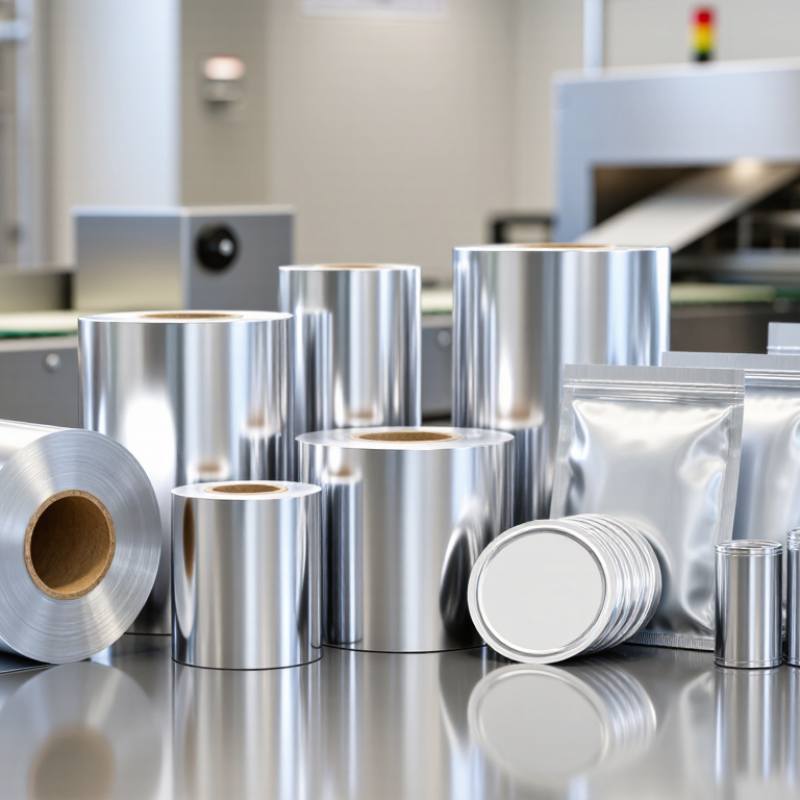
Match foil alloy, temper, and gauge before comparing prices. Packaging foil commonly spans 6–50 µm, but thickness alone does not predict performance. Alloy 8011 is widely used for general packaging, while 8079 can suit applications needing strong barrier performance at lower gauges. Soft O temper bends readily; harder tempers can offer better stiffness. Confirm the supplier’s specification and test the foil on your actual filling and sealing line.
Tip: Check the roll. Ask for alloy, temper, thickness tolerance, and a recent certificate of analysis. EAFA’s 2022 statistics recorded 886,000 tonnes of European foil deliveries across end uses—a reminder that “foil” covers many different products, not one standard grade. That volume does not tell you which material fits your package. A 12 µm sample may work well for one dry product, yet wrinkle or puncture in another application.
Compare samples under real conditions. Print adhesion, fold behavior, sealing temperature, and transport damage all matter. Ask for trials with your ink and laminate structure, then inspect edges and pinholes under consistent lighting. A thicker sample can feel reassuring, but that impression is not a test. I would still leave room for adjustment after a line trial; lab results do not always predict fast production runs.
When buying printed aluminium foil, request water vapour transmission rate (WVTR) data under ASTM F1249 and oxygen transmission rate (OTR) data under ASTM D3985. These methods measure barrier performance; they do not set universal pass limits. Ask for the test temperature, relative humidity, specimen thickness, conditioning time, and units alongside each result. Rates measured under different conditions are not directly comparable.
Small leaks matter. The FAO’s 2019 report, The State of Food and Agriculture, estimated that 14% of food is lost between post-harvest and retail stages. That figure is not specific to packaging, but it underscores why moisture and oxygen protection deserve measurable targets.
Set acceptance limits around the product’s sensitivity, shelf life, and distribution conditions—not a generic “high barrier” claim. WVTR is commonly reported in g/m²/day; OTR in cm³/m²/day. Request results for the finished laminate, including its printed layer and actual thickness, then compare suppliers using identical test conditions. A flat-film result alone may miss weak seals or damage from converting and handling.
Test the real package. For critical products, consider repeat testing after flexing and confirm package seals separately. One caveat: a clean laboratory coupon can look excellent while a production package performs less well.
Keep the report, sample construction, and agreed limits together in the purchasing specification.
Before approving printed aluminium foil, define the print repeat in millimetres and identify where measurement begins. A small repeat shift can move text toward a seal area or leave a visible mismatch at the roll splice. Ask for samples from the actual press, not only a digital proof. Record the measured repeat across several consecutive cycles; one reading can hide drift.
Set color tolerance using CIEDE2000 (ΔE00), and state the reference lighting, measurement instrument, and sampling locations. There is no single tolerance that suits every design. A large solid panel may show variation more clearly than fine text. Agree on a target and maximum before production, then compare readings from multiple positions across the web. Keep the signed sample. Useful, but not perfect.
Ink adhesion needs a documented test on the finished foil. ASTM F2252/F2252M describes tape testing for ink and coating adhesion on flexible packaging materials. Specify tape, conditioning, peel procedure, and acceptance criteria, then retain the results by lot. ASTM D3359 uses a 0B–5B classification, but its rating should not automatically replace a flexible-packaging method. Include abrasion or handling checks if rolls face frequent rewinding. A clean test result can still miss real line conditions; review any failure with the converter before changing ink or surface treatment.
| Tip | What to Specify | Practical Acceptance Criteria | How to Verify |
|---|---|---|---|
| 1. Define the print repeat | State the repeat length in millimetres, its measurement reference, and the permitted variation. | A buyer and supplier might agree on a target such as 250 mm with a tolerance of ±1 mm. Set the actual tolerance according to the converting equipment and package design. | Measure several consecutive repeats on a relaxed, flat sample using a calibrated ruler or measuring system; record the average and variation. |
| 2. Set color tolerances | Provide approved color references and specify the measurement method, illuminant, observer, and color-difference formula. | A project may use an agreed limit such as ΔE00 ≤ 3 for critical brand colors. Treat this as a negotiated target, not a universal industry limit. | Measure printed samples with a calibrated spectrophotometer under the agreed conditions and compare them with the signed standard. |
| 3. Require ink-adhesion testing | Agree on a test method, tape type, application procedure, dwell time, and pass/fail rating before production. | For example, specify a consistent cross-cut and tape test with no visible ink removal beyond the agreed rating. Adapt the method for foil thickness, coating, and ink system. | Test samples from the production run after the specified drying or curing period; document the result and retain tested samples. |
| 4. Confirm artwork and registration | Approve a final, to-scale artwork file and define register tolerance between colors and any die-cut or forming features. | A tolerance such as ±0.5 mm may be suitable for some designs, but the acceptable value depends on line capability and the package structure. | Inspect a printed proof and production samples for color-to-color alignment, text legibility, and alignment to converting marks. |
| 5. Specify the foil and surface | Identify alloy or temper where relevant, nominal thickness, width, finish, and whether the print surface is coated or treated. | Use a stated nominal thickness and tolerance that match the end use. Confirm that the chosen ink and coating system is compatible with the supplied surface. | Check supplier certificates and measure thickness with a suitable calibrated gauge; inspect samples for pinholes, wrinkles, and surface defects. |
| 6. Match the ink system to the application | Specify the intended use, printing process, required resistance, and any applicable food-contact or regulatory requirements. | Request documented suitability for the intended construction and conditions, including any relevant heat, moisture, oil, or abrasion exposure. | Review technical documentation and test representative laminated or converted samples under the actual or simulated use conditions. |
| 7. Approve a production sample and inspection plan | Define the approved reference sample, inspection frequency, defect categories, packaging method, and traceability information. | Set acceptance limits for repeat, color, registration, adhesion, and visible defects before the order is placed. | Compare incoming rolls with the approved sample and purchase specification; record lot details and isolate any nonconforming material. |
Printed aluminium foil can look simple, but food-contact compliance depends on the complete package. Check the rules in the destination market before approving artwork or production. Requirements may vary with the food type, contact time, and storage temperature. A foil tray used for hot, oily food may need a different assessment from a wrapper for dry sweets. I would not assume aluminium alone settles the question.
Tip: Ask the supplier for a current declaration of compliance and supporting migration test reports. Confirm that the documents cover the exact foil structure, coating, printing inks, and intended use. Check whether testing reflects realistic conditions, such as warm filling or prolonged storage. A report for a similar material may not apply. Small differences matter.
Tip: Keep printing on the non-food-contact side, and ask how the supplier controls ink transfer when printed rolls are stacked. Also check risks at cut edges and seals. Request traceable material specifications, then confirm them against the destination market’s current rules or a qualified local adviser. Rules change. I’d recheck before each new market launch, even when the design stays the same.
When comparing printed aluminium foil, ask suppliers to quote cost per 1,000 m², not only price per roll. A roll may look cheaper because it is narrower or shorter. Include printing setup, cores, packing, and freight assumptions in the quote. Check whether the quoted area uses nominal width and length, or usable material after edge trimming. Small differences matter across repeat orders.
Minimum order quantity (MOQ) affects both unit cost and leftover stock. A low MOQ can suit a seasonal design, while a larger run may reduce the area price. But cheaper is not always better. Estimate how many rolls your line can consume before the artwork changes or the foil has spent too long in storage. Ask whether mixed widths or designs count toward the same MOQ. Terms vary.
Match roll dimensions to the actual machine. Confirm web width, outside diameter, core diameter, winding direction, and tolerances, then test a sample roll at normal speed. Record any splice limits. Also define defect allowances in writing, including acceptable pinholes, print registration drift, scratches, and how rejected area is measured. Request a sample inspection report and agree on how claims are documented. One awkward point: a supplier’s defect percentage may use a different denominator than your production team. Align the calculation before comparing offers, even if it slows the purchase.