
Choosing the right paper for food packaging starts with the food itself. A dry pastry needs different protection from a greasy sandwich or a chilled salad. Consider moisture, oil, temperature, serving time, and how the package will be handled. A paper that looks sturdy on a sample table may soften after ten minutes beside a warm filling. Small details matter.
Weight and stiffness affect carrying, while surface treatments can influence resistance to grease or moisture. These features should match the intended use, not just the package’s appearance. Ask suppliers for clear product specifications and food-contact documentation relevant to your application. Then test the paper with the actual food, including realistic filling, storage, and transport conditions. A quick bench test can reveal stains, leaks, or weak seams. It is not enough to judge by appearance.
The phrase food in paper can describe many different uses, from bakery bags to takeaway wraps, and no single paper suits them all. Recyclability and other environmental claims also depend on the paper’s coating, local collection systems, and disposal route. Check those details rather than relying on a green-looking label. There may be trade-offs: stronger barriers can improve performance but complicate end-of-life choices. That deserves a second look. A practical selection process weighs protection, usability, supplier evidence, and disposal together, then verifies the choice in real conditions before ordering at scale.
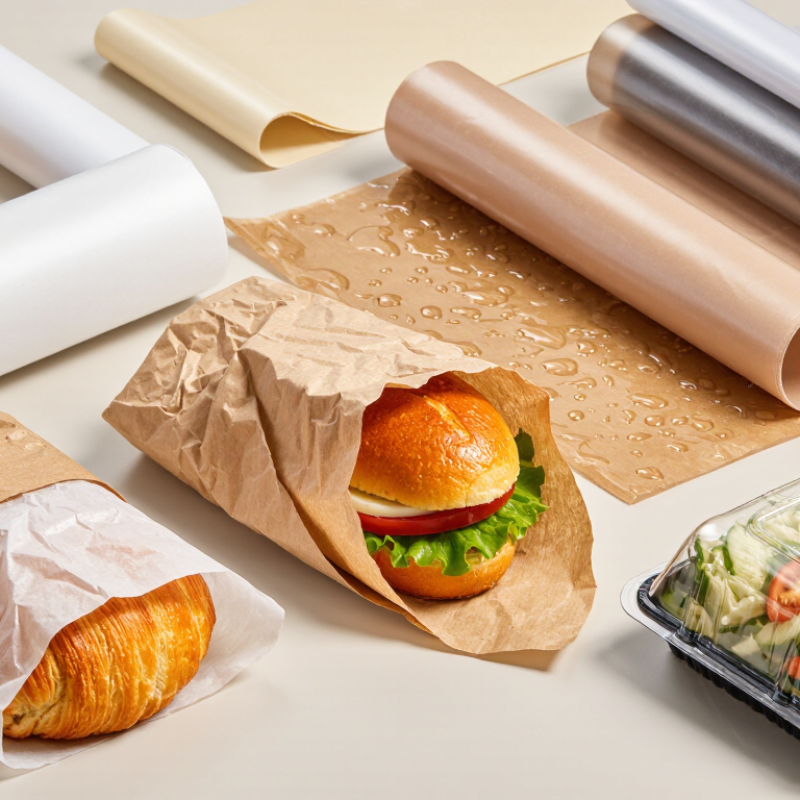
Before choosing paper, identify the food’s condition when packed and when eaten. A warm pastry can release steam, while a chilled sandwich may collect moisture inside its wrapper. Fried foods need paper that resists grease without making the crust feel damp. Dry cookies have different needs; aroma protection and stiffness may matter more than strong moisture barriers.
Consider how the package will be handled. Will it sit in a display case, travel in a delivery bag, or hold a heavy serving? A thin sheet may suit a dry biscuit, but a folded meal may need a stronger paperboard structure. Check whether the paper keeps its shape after contact with oil or condensation. A neat-looking sample can still fail during a busy lunch rush. And food temperature matters. Match the paper’s coating and construction to the actual use, then verify suitability for the intended food-contact application. It is easy to specify too much; test a realistic portion before settling on a heavier option.
Tips: Place a sample against the food for the expected holding time. Check for soft spots, grease marks, leaks, and trapped steam. If results vary, repeat the test under ordinary packing conditions.
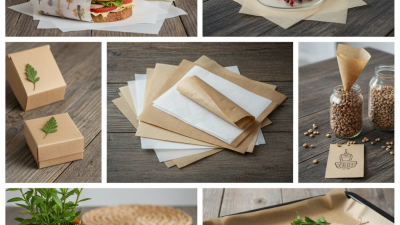
Choose paper by matching its grade to the food and filling line. Kraft paper offers toughness for wraps and bags, while solid bleached board provides a smooth surface for sharp printing. Recycled grades can reduce virgin-fiber use, but their stiffness and appearance may vary. Check food-contact suitability and run a trial with the actual product; a dry snack and a greasy pastry need different protection.
Coatings change how paper handles moisture, oil, and oxygen. Aqueous coatings may suit light moisture resistance, while polymer layers can provide stronger water or grease barriers. Compare water-vapor transmission rate (WVTR) and oxygen transmission rate (OTR) at relevant temperature and humidity. These numbers are not interchangeable across test conditions. Eurostat reported that 83.2% of paper and cardboard packaging was recycled in the EU in 2022. That figure makes end-of-life design worth considering, but coated packaging’s recyclability depends on local collection and processing systems. More barrier is not automatically better.
Tips: Test the finished package, not just a paper swatch. Try a few hours with warm, oily food, then inspect for leaks, softening, and odor transfer. Record coating weight and test conditions. It is easy to over-specify a barrier—and still miss the real failure point, often a seam or fold.
| Paper grade or construction | Typical basis weight* | Common food-packaging uses | Grease barrier | Moisture and water barrier | Oxygen and aroma barrier | Heat and sealing | End-of-life considerations |
|---|---|---|---|---|---|---|---|
| Uncoated kraft paper | 約 40–120 g/m² | Bags, wraps, dry-food sachets, and outer packaging | Low; oil can penetrate unless the paper is treated or paired with a barrier layer. | Low; paper absorbs moisture and loses strength when wet. | Limited; paper is generally not a dependable oxygen or aroma barrier. | Usually not heat-sealable without a compatible coating or added sealant. | Often straightforward to recycle when clean and free of incompatible coatings or food residue. |
| Grease-resistant paper Highly refined or otherwise treated fiber paper |
約 30–80 g/m² | Baking liners, sandwich wraps, bakery bags, and food-service wraps | Medium to high, depending on grade and test conditions; not all grades resist hot or heavy oil equally. | Low to moderate; grease resistance does not necessarily provide a moisture barrier. | Limited; typically unsuitable as the sole barrier for oxygen-sensitive foods. | Some grades tolerate baking temperatures; verify the supplier’s temperature and food-contact specifications. Usually not heat-sealable by itself. | May be recyclable if the treatment and local mill requirements permit; food contamination can affect collection and processing. |
| Glassine paper Dense, supercalendered paper |
約 30–90 g/m² | Interleaving sheets, confectionery wraps, labels, and dry-food liners | Moderate; performance varies by grade and does not equal a dedicated greaseproof treatment. | Better resistance to air and moisture passage than many ordinary papers, but not a waterproof barrier. | Can provide improved protection compared with ordinary paper, but performance depends on grade, humidity, and construction. | Generally not heat-sealable unless specially coated or combined with a sealant. | Often recyclable as paper when uncoated and clean; confirm acceptance with local recycling programs. |
| Solid bleached sulfate (SBS) paperboard | 約 200–400 g/m² | Folding cartons for dry foods, frozen-food cartons, and cups when converted with a suitable barrier | Low when uncoated; can be improved with a grease-resistant coating or liner. | Low when uncoated; coated or laminated constructions are used where moisture resistance is needed. | Limited as plain board; a separate barrier layer may be required for sensitive products. | Board is not inherently heat-sealable; sealing depends on the coating or package design. | Uncoated board is commonly recyclable; plastic or other barrier layers can affect recyclability. |
| Clay-coated paperboard Coated on one or both sides |
約 200–400 g/m² | Printed cartons, sleeves, and dry-food boxes | Low to moderate; the clay coating mainly improves print surface and is not, by itself, a reliable grease barrier. | Low to moderate; clay coating alone does not make the board waterproof. | Limited; usually needs an additional barrier for oxygen- or aroma-sensitive products. | Not normally heat-sealable without a compatible sealant layer. | Often recyclable if the construction is predominantly fiber and accepted by local mills; added laminates may change this. |
| Polyethylene (PE)-coated paper or board | Paper or board commonly about 30–400 g/m², plus coating | Drink cups, liquid-food cartons, wrappers, and food trays | Generally good when the coating is continuous and correctly converted. | Good moisture resistance; liquid resistance depends on coating weight, coverage, seams, and package design. | PE helps limit moisture transmission but is not a high oxygen barrier; additional layers may be needed. | Can be heat-sealed when designed with a suitable PE seal layer and process settings. | Fiber recovery can be more complex than for uncoated paper; recycling availability depends on local facilities and packaging design. |
| Aqueous-barrier-coated paper or board | Substrate commonly about 40–400 g/m², plus coating | Food-service wraps, trays, cartons, and selected takeaway packaging | Ranges from low to high; depends on coating chemistry, coat weight, and food conditions. | Ranges from limited to good; performance is product-specific and should be confirmed with test data. | Often limited; do not assume oxygen or aroma protection without measured barrier data. | Some formulations are heat-sealable; others are not. Confirm sealing compatibility and operating window. | Some designs are engineered for paper recycling, but acceptance depends on coating formulation, amount, and local mill capability. |
*Basis-weight ranges are indicative examples, not universal specifications. Actual barrier performance depends on grade, coating weight, humidity, temperature, converting, seams, and test method. For food-contact use, verify regulatory compliance, migration documentation, and performance data for the finished package.
Food-contact safety depends on how the paper will be used. A wrapper for dry bread faces different conditions from a carton holding hot, oily food. Check the intended food type, contact time, and temperature before selecting a grade. Details matter. Recycled content is not automatically unsuitable, but its source and processing controls deserve careful review.
Ask suppliers for current food-contact documentation and confirm it covers the paper, coatings, inks, and adhesives in your final packaging. Requirements vary by market, so verify the applicable rules where the product will be sold. When needed, use qualified laboratory testing to assess potential substance transfer under realistic conditions, such as warm food resting against a coated surface. Keep product specifications, test reports, and lot records together. Paper can look perfectly clean and still need closer checks.
Tips: Match test conditions to real use, not just room-temperature storage. Confirm that documents name the exact material and intended application. If a coating or supplier changes, review the assessment again. It may feel overly cautious, but assumptions are easy to miss.
The chart shows selected temperature options for EU overall-migration test conditions for plastic food-contact materials. These conditions may be relevant to plastic coatings or layers in paper packaging; they are not a universal test rule for paper or paperboard. Choose a paper grade and any coating based on the food, contact time, temperature, and applicable national requirements. Confirm compliance with the supplier’s documentation and appropriate testing.
Reference: Commission Regulation (EU) No 10/2011, Annex V. Test conditions shown are illustrative; the applicable condition depends on the intended use.
Evaluate Strength, Shelf-Life, and Packaging Performance
A paper pack must survive real handling, not just look sturdy on a sample table. Check edge-crush strength, burst resistance, and puncture performance against the product’s weight and route. A stacked case of jars needs different support from a lightweight bakery sleeve. TAPPI and ASTM test methods can help compare materials, but test results depend on conditioning. Humid storage can weaken paperboard. Small detail, big consequences.
Shelf life depends on more than paper thickness. Grease, water vapor, oxygen, light, and sealing quality can all affect food inside. The FAO’s 2019 report, The State of Food and Agriculture, estimated that 14% of food is lost between harvest and retail. Packaging cannot prevent every loss, but poor barrier performance can add avoidable damage. Match coatings or liners to the food and storage conditions, then check whether seals stay intact during transit.
Packaging performance also means opening, stacking, and disposal in actual use. USDA’s 2014 food-loss report estimated that 31% of the U.S. food supply was lost at retail and consumer levels; packaging is only one part of that picture. Run small trials with filled packs, not empty samples. Record leaks, crushed corners, and freshness over time. The numbers may look good. The pack may still disappoint. That is worth admitting early.
Choosing food-packaging paper means weighing more than the sheet price. A lightweight grade may use less fiber, but if it tears around a damp sandwich, the replacement and food waste add cost. A heavier sheet can feel reassuring, yet it may be unnecessary for dry biscuits. Match the paper to the actual food, filling weight, and time in transit. Then test it on a busy shift, not just on a clean desk.
Sustainability also depends on what happens after use. Uncoated paper is often easier to recycle where paper collection accepts it, while grease-resistant or moisture-resistant treatments may change local disposal options. Ask your waste provider what it accepts; don’t assume a recycling symbol tells the whole story. It can be awkward to learn that a carefully chosen package belongs in general waste. Check supplier specifications, too, and compare price per usable package, including storage, damage, and disposal fees. A small trial with hot, oily, and cold items can reveal leaks or sogginess early.
Perfect answers are rare. Keep the trade-offs visible.