
China has become a major paper manufacturing center, giving global buyers a broad supplier base for bakery paper. The China Paper Association reported approximately 129.65 million tonnes of paper and paperboard production in 2023. That scale supports stable material sourcing, coating development, and export capacity. However, volume alone does not guarantee dependable bakery performance.
Professional buyers should examine grease resistance, heat tolerance, folding strength, and food-contact compliance. The paper must remain stable beside hot bread, oily pastries, and frozen dough. Smithers’ sustainable packaging research highlights growing demand for recyclable, fiber-based packaging and clearer material traceability. These trends are changing how international buyers evaluate Chinese suppliers.
Reliable suppliers normally provide product specifications, batch records, test reports, and samples from current production. FSC or PEFC certification can support responsible fiber sourcing, while ISO 9001 systems may indicate stronger process control. Still, a certificate is not proof of every shipment. Buyers should confirm coating composition, basis weight, printing quality, and migration-test documentation before placing large orders.
No supplier is perfect. Even experienced factories may face color variation or delayed communication during peak seasons. This guide reviews China’s best bakery paper suppliers through practical purchasing factors, including customization, export experience, quality consistency, and transparent documentation. The goal is not to promote the lowest price. It is to help global buyers select paper that performs reliably from factory production to the customer’s oven and display counter.
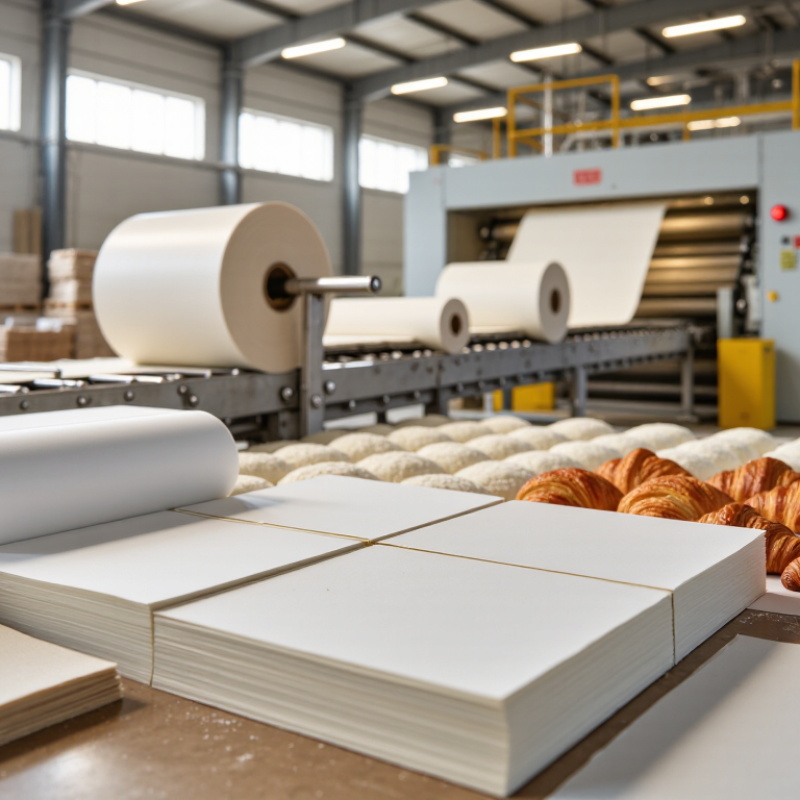
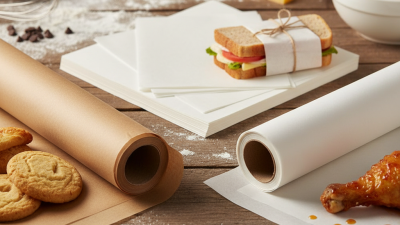
China’s bakery paper suppliers produce more than basic parchment sheets. Common products include silicone-coated baking paper, greaseproof paper, muffin liners, cake collars, paper baking cups, and corrugated cake boards. Each product serves a different baking task. Parchment supports clean release from trays. Greaseproof paper helps manage oil in pastries and fried snacks. Paper cups provide shape for muffins and small cakes.
A 2024 Smithers packaging report projects steady growth in global paper-based packaging demand through 2028, with food applications remaining a major driver. This trend supports wider use of paper bakery products. However, buyers should inspect coating uniformity, basis weight, folding strength, and heat resistance. A thin liner may curl beside a hot oven wall. A weak cake board may bend under a layered sponge. Supplier experience matters, but test evidence matters more. I have found that attractive samples can still fail after humidity exposure.
Tips: Request food-contact declarations, migration test reports, and production samples. Check the paper at the actual baking temperature. Confirm roll width, sheet tolerance, packing method, and carton protection. Small details prevent costly rework. Do not rely on “compostable” claims alone; verify the applicable certification and disposal conditions.
| Bakery Paper Product | Typical Material | Common Product Formats | Typical Temperature Range | Main Bakery Applications | Key Functional Properties | Common Customization Options | Important Buyer Checks |
|---|---|---|---|---|---|---|---|
| Unbleached Baking Paper | Unbleached cellulose paper, usually silicone-coated for release | Rolls Pre-cut sheets Interleaves | Commonly about 200–230°C, depending on the paper and coating specification | Cookies, bread, pastries, roasting and food preparation | Non-stick surface, grease resistance, natural brown appearance and oven suitability | Sheet size, roll width, roll length, packaging format and printed outer packaging | Confirm the declared maximum temperature, coating uniformity, odor neutrality and food-contact documentation |
| Bleached Baking Paper | Bleached cellulose paper with a silicone release coating | Flat sheets Rolls Dispenser boxes | Often specified for baking temperatures up to approximately 220–230°C | White bread, cakes, biscuits, laminated dough and pastry production | Clean white appearance, easy release, grease resistance and reduced pan cleaning | Basis weight, sheet dimensions, roll width, core size and retail or food-service packing | Check whether the product is chlorine-free or totally chlorine-free when required, and verify food-contact compliance for the destination market |
| Pre-Cut Baking Sheets | Bleached or unbleached silicone-coated parchment paper | Half-sheet size Full-sheet size Custom die-cut sheets | Generally designed for standard baking temperatures; exact limits depend on coating and paper construction | Commercial ovens, bakeries, cafés, hotels and institutional kitchens | Fast handling, consistent dimensions, reduced paper waste and easy tray loading | Length, width, corner shape, stacking quantity, dispenser carton and perforation | Measure sheet tolerance, stacking performance, curling behavior and compatibility with the intended tray size |
| Baking Paper Rolls | Silicone-coated parchment paper wound around a paper core | Household rolls Food-service rolls Industrial rolls | Typically used within the supplier-declared baking temperature limit, often around 200–230°C | Continuous cutting for baking trays, production lines and catering operations | Flexible dispensing, long running length, grease resistance and non-stick performance | Roll width, length, core diameter, winding direction, perforation and carton design | Check roll tension, edge quality, telescoping, perforation accuracy and core dimensions |
| Cupcake and Muffin Liners | Grease-resistant baking paper, parchment paper or coated paperboard | Standard round liners Tulip liners Petal liners | Commonly suitable for baking temperatures of approximately 180–220°C, subject to the specification | Cupcakes, muffins, mini cakes and individual sponge products | Shape retention, grease resistance, easy product removal and attractive presentation | Base diameter, wall height, paper color, pleat count, printing and packing quantity | Test fit with the baking tray, oil migration, color stability and liner separation after baking |
| Tulip and Lotus Baking Cups | Folded parchment-style paper, often grease-resistant or lightly coated | Tulip cups Lotus cups High-wall cups | Usually intended for cake and muffin baking temperatures; confirm the exact coating limit | Premium muffins, filled cupcakes, oversized pastries and bakery display products | Decorative shape, higher product visibility, free-standing structure and grease resistance | Diameter, height, paper weight, color, fold pattern, printing and carton packing | Check opening stability, dimensional consistency, filling capacity and performance in convection ovens |
| Paper Baking Molds | Food-grade paperboard, often laminated or coated for improved grease resistance | Loaf molds Round cake molds Panettone-style molds | Many formats are designed for approximately 180–220°C; the exact limit varies by construction | Loaf cakes, sponge cakes, fruit cakes, sweet breads and gift bakery products | Self-supporting structure, oven resistance, presentation value and reduced washing requirements | Shape, capacity, wall height, base construction, color, printing and handle design | Verify structural strength when filled, leakage resistance, seam quality and food-contact suitability |
| Bread Bag Paper | Kraft paper, grease-resistant paper or paper combined with a transparent food-contact window | Flat bags Gusseted bags Window bags | Generally intended for packaging after baking rather than direct oven use | Baguettes, sandwich loaves, rolls, buns and packaged pastries | Breathability, grease resistance, stackability and printable outer surface | Bag dimensions, gusset size, window area, closure style, paper weight and printing | Check moisture management, seal or fold performance, grease staining and applicable packaging regulations |
| Bakery Greaseproof Paper | Highly refined cellulose paper with grease-resistant treatment | Sheets Rolls Food wrapping sheets | Often used for wrapping or lining; not automatically suitable for oven use unless specifically declared | Pastry wrapping, bakery baskets, sandwich lining and food-service presentation | Oil resistance, smooth surface, lightweight construction and good folding performance | Paper weight, sheet size, color, grease resistance level, coating type and packaging | Do not assume oven suitability; request a clear statement distinguishing greaseproof, parchment and baking-paper grades |
| Silicone-Coated Parchment Paper | Cellulose parchment paper coated on one or both sides with food-contact silicone | Single-side coated Double-side coated Sheets and rolls | Common commercial specifications are approximately 200–230°C, but the declared limit must be confirmed | Sticky dough, caramel, cookies, pastries and reusable baking applications | Strong release performance, heat resistance, grease resistance and reduced sticking | Coating side, silicone level, basis weight, color, roll format, sheet size and packaging | Evaluate release after baking, coating transfer, odor, curl, tensile strength and migration documentation |
| Printed Bakery Wrapping Paper | Food-grade kraft, greaseproof or coated paper with food-safe exterior printing | Wrapping sheets Paper bags Basket liners | Usually for post-baking packaging; direct oven use requires a separate heat-resistant specification | Pastry wrapping, takeaway bakery items, bread baskets and café service | Brand-neutral decoration, grease resistance, foldability and food presentation | Paper color, ink coverage, sheet or bag size, print colors, folding and packing method | Confirm ink suitability, set-off resistance, odor, rub resistance and compliance with the importing country’s rules |
| Air-Fryer and Small-Tray Baking Paper | Perforated or non-perforated silicone-coated parchment paper | Round liners Square liners Perforated sheets | Commonly specified for approximately 180–220°C; paper must not contact exposed heating elements | Small cakes, cookies, pastries and food preparation in compact ovens | Non-stick performance, convenient placement, optional airflow perforations and grease resistance | Diameter, shape, perforation pattern, tab design, pack quantity and dispenser packaging | Confirm correct tray fit, airflow performance, edge stability and clear usage instructions for consumers |
| Reusable Baking Mat | Food-grade silicone reinforced with fiberglass mesh | Flat mats Perforated mats Custom tray mats | Many products are rated around 220–260°C; the exact maximum depends on the silicone construction | Cookies, bread rolls, macarons and pastry production | Reusable non-stick surface, dimensional stability and reduced use of disposable paper | Mat dimensions, thickness, perforation, edge treatment, color and packaging | Check temperature rating, fiberglass exposure prevention, cleaning durability, odor and food-contact certification |
| Cake Board and Bakery Base Paper | Paperboard, coated paperboard or laminated board designed for food presentation | Round boards Square boards Cake cards | Normally used after baking and is not intended for direct oven exposure unless specifically stated | Cakes, tarts, pastries, bakery boxes and dessert displays | Rigidity, moisture resistance, clean presentation and easy handling | Diameter, thickness, edge finish, color, surface coating, printing and packing quantity | Verify load-bearing strength, moisture resistance, edge safety, coating suitability and dimensional tolerance |