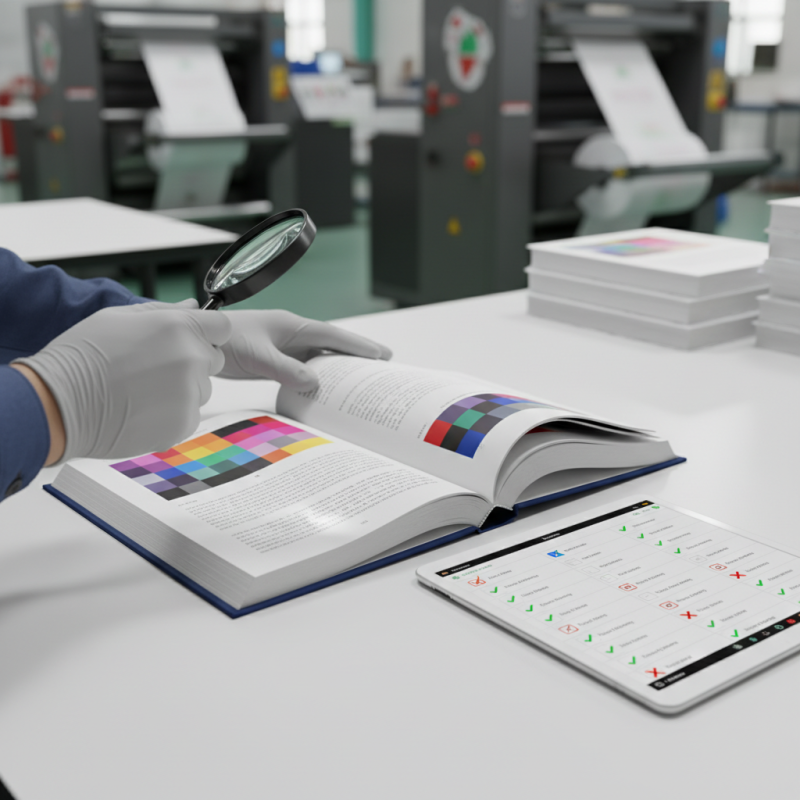
What is Book Printing Inspection and Why is it Important?
Book Printing Inspection is a critical process in the publishing industry. It ensures that books meet quality standards. From the cover to the binding, every detail matters. Poor printing can ruin a reader's experience.
During Book Printing Inspection, various checkpoints are monitored. Colors must be vibrant, and text needs to be clear. Any deviation can lead to a flawed product. It's essential to catch these errors early. Often, errors may go unnoticed until the final product is in hand. This can impact sales and reputation.
Yet, the inspection process is not flawless. Human error can occur. Some defects might be overlooked during inspections. This raises questions about the effectiveness of the entire process. Is our focus on inspection enough? Continuous improvement is necessary for quality assurance in book printing.
What is Book Printing Inspection?
Book printing inspection is a crucial process in the publishing industry. It ensures that the printed materials meet the expected quality standards. This inspection involves checking various elements such as text alignment, color accuracy, and overall print quality. Any discrepancy, no matter how small, can affect the book’s appeal and readability.
During the inspection, technicians closely examine the printed pages. They look for issues like smudges, fading, or incorrect margins. These details, while seemingly minor, can significantly detract from a reader's experience. Even a single page with a printing error may lead to dissatisfaction. Thus, it’s essential to address these concerns proactively.
Mistakes can still happen, even with careful inspection. Sometimes, human error or poor communication can lead to overlooked issues. These flaws remind us that no process is perfect. Continuous improvement is necessary in book printing inspection. This ongoing refinement ensures that the final product reflects the intent and quality desired by authors and publishers alike.
The Process of Book Printing Inspection Explained
Book printing inspection is crucial to ensuring the quality and accuracy of printed materials. The process typically involves several stages, including pre-press proofing, in-press checks, and post-press evaluations. According to industry data, about 30% of printed products contain errors that go unnoticed during production. This highlights the importance of a rigorous inspection process.
During pre-press checks, proofs are evaluated for color accuracy and layout. Problems at this stage can lead to costly reprints. In-press inspections monitor print quality in real time, catching issues such as ink smudging or misalignment. Post-press evaluations assess the final product for packaging and finishing flaws. Research shows that 80% of printing defects are fixable if detected early.
However, the inspection process is not foolproof. Human error can still lead to missed mistakes. A study indicated that nearly 10% of printed books have inconsistencies, even after thorough inspections. Continuous training for staff on inspection techniques is essential. This ongoing education can decrease error rates significantly. Thus, investing in both technology and personnel is vital for improving the overall quality of book printing.
Key Aspects of Quality Control in Book Printing
Quality control in book printing is essential for ensuring a polished final product. One key aspect is color accuracy. A book filled with distorted colors can frustrate readers. Accurate color matching is vital for an appealing layout. Printers must frequently check color samples against standards. This helps prevent costly errors that may require reprints.
Another important area is binding quality. Loose pages or misaligned edges are serious issues. A well-bound book feels sturdy and professional. Inspectors should check every batch thoroughly. They must ensure the binding holds up under normal use. Even minor flaws can make a book look cheap.
Ink consistency is also crucial. Variations in ink can lead to splotches or faded text. Quality inspectors need to assess the ink’s thickness and drying time. A book’s readability relies heavily on bold, clear text. Regular checks can catch inconsistencies early. This proactive approach minimizes waste and enhances satisfaction.
Common Issues Identified During Book Printing Inspection
Book printing inspection plays a crucial role in maintaining quality. During this process, various common issues can emerge, impacting the final product. One significant problem is color misalignment. If the colors do not align correctly, it can distort images and text. This can happen due to poor calibration of printing machines.
Another issue is paper quality. Sometimes, the paper used may not meet the required standards. It can be too thin or too thick, affecting durability. Additionally, binding flaws can lead to pages falling out or being misaligned. This often relates to improper sealing or stitching.
Lastly, text errors remain a persistent challenge. Mistakes in spelling or grammar can slip through the cracks, leading to a less professional presentation. Each of these problems can tarnish a book's reputation. Identifying them early through inspection is vital. It's not just about aesthetics; it's about delivering a product that meets reader expectations.
The Importance of Book Printing Inspection for Publishers and Authors
The importance of book printing inspection cannot be overstated for both publishers and authors. It's a critical step that helps maintain quality throughout the printing process. According to a report by the Publishing Industry Association, nearly 30% of books returned by retailers are due to quality issues. This statistic underscores the need for meticulous inspection.
When errors occur, they are often costly. A misprint can lead to reprints, causing delays and extra expenses. For independent authors, this can mean the difference between success and obscurity. Data reveals that readers are quick to judge a book's credibility based on its physical quality. If a book looks unprofessional, readers may not buy it, regardless of the content.
In addition, inspection can help prevent potential legal issues. Errors in printed materials may lead to miscommunication or copyright infringements. Such mistakes can become public relations nightmares. Therefore, having a rigorous inspection process is not just a best practice; it's an essential safeguard for a publisher's reputation and an author's legacy. Ensuring a well-executed inspection process ultimately builds trust in the product being presented to readers.
Importance of Book Printing Inspection
The chart above illustrates the importance of various factors in book printing inspection. Quality control is prioritized, followed by customer satisfaction, emphasizing the critical need for rigorous inspection processes in publishing.